Buyer Guide / 23 min read
Private Label Smart Toilets: OEM Guide for US Retailers
Learn how US bathroom retailers source private label smart toilets. Compare OEM and ODM, branding options, MOQ, certifications, samples and wholesale supply.
Key takeaways
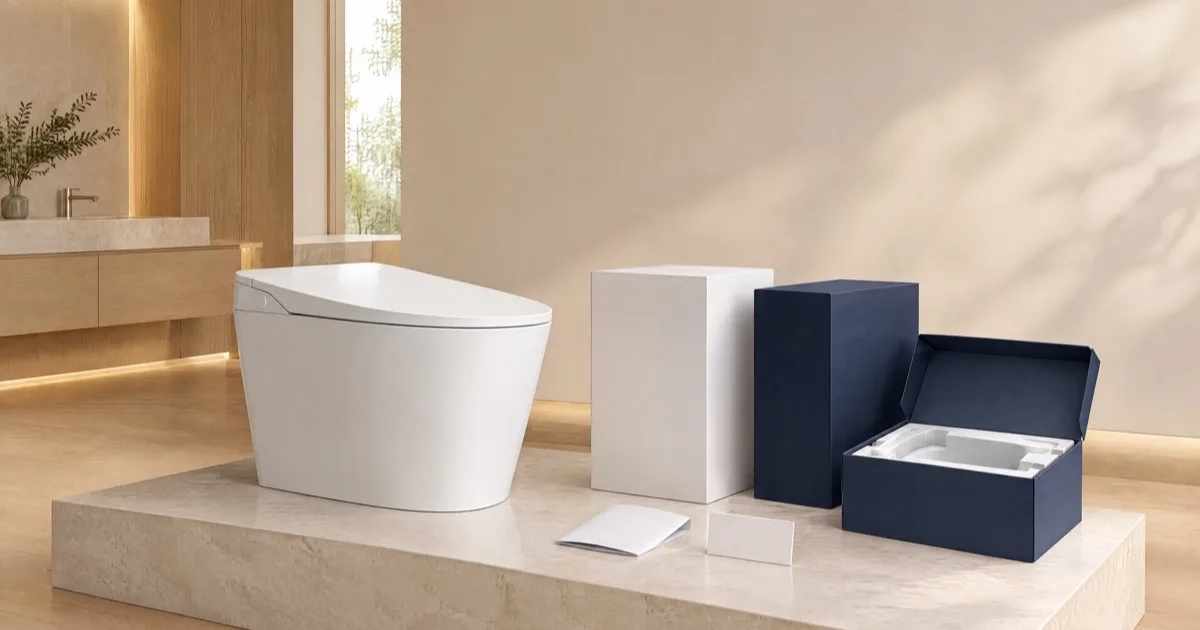
- Private label sells an approved product under the retailer's brand; OEM and ODM describe different levels of specification and design involvement.
- A one-unit stock order for showroom evaluation does not establish a one-unit custom production MOQ.
- Voltage, rough-in, certifications, manuals and country-of-origin marking must be confirmed for the exact model and any approved branding change.
- A retail program needs a sample approval, packaging specification, quality-control plan, replenishment route and after-sales parts process before launch.
B2B sourcing checklist
Move from research to a model-specific quotation
Use the resources below to confirm specifications, compliance scope, order terms and delivery timing before requesting a quote.
A private label smart toilet lets a US bathroom retailer sell a documented product under its own brand instead of competing only on third-party brands that every nearby showroom can also carry.
The commercial appeal is easy to understand. The execution is not. A smart toilet combines ceramic, plumbing, electronics, heated seating, bidet washing and automatic controls. A retail brand has to get the product, voltage, rough-in, documentation, packaging, certification scope and after-sales support right before the first container or pallet arrives.
This is not another general guide to finding a supplier. It focuses on the private label decision itself: what can be branded, how OEM and ODM differ, how MOQ really works, which US requirements need to be checked, and what a retailer should prepare before requesting a quote.
The Lavilys smart toilet range and electronic bidet seats provide the product platforms a retailer can evaluate. For professional buyers, Lavilys reviews qualified private label, logo, retail packaging and selected OEM/ODM requirements for professional buyers. Availability, tooling, quantities, documentation and lead times are confirmed against the requested program rather than promised as a standard package.
For supplier vetting and factory verification, use the smart toilet supplier selection guide. For the logistics decision between factory production and US warehouse stock, use the container vs US warehouse comparison. This article assumes the retailer has chosen to explore a brand and needs to build the program.
What Are Private Label Smart Toilets?
Private label smart toilets are products sourced from a manufacturer or supply partner and sold under a retailer’s own brand.
The retailer does not necessarily design every component. Instead, it selects an approved product platform and agrees on a defined branding and supply arrangement.
Depending on the program, private labeling may include:
- Retailer logo on an approved surface
- Custom retail carton and artwork
- Branded product labels
- Retailer-specific model names
- User manuals and retail documentation
- Selected finish or feature configurations
- Product photography and sales materials
Not every program includes every item. A basic program may involve approved branding and packaging on an existing model. A more advanced program may require engineering review, new tooling, additional testing or changes to the technical configuration.
For an electronic product sold in the United States, any change that affects the approved design, labeling or compliance records should be reviewed before production. A logo on a carton is a marketing change; a different control board or heating system is an engineering change. The two should not be treated as equivalent.
Private Label vs OEM vs ODM: What Is the Difference?
The three terms are related, but they describe different levels of involvement. Suppliers sometimes use them loosely, so the written agreement matters more than the label.
Private label smart toilets
Private labeling usually means selling an existing product or approved platform under the retailer’s brand. The supplier provides the product; the retailer develops the consumer-facing identity.
A bathroom showroom might select an existing integrated smart toilet and request an approved logo, a branded carton and a retailer-specific manual cover. The core product remains the same.
This is often the fastest route to a branded range because it starts with a product that already has documentation, tooling and production experience.
OEM smart toilets
OEM stands for Original Equipment Manufacturer. In sourcing, OEM often describes production to an agreed buyer specification.
That specification may cover branding, configuration, materials, packaging or other approved product details. OEM does not automatically mean the retailer designed every component, and it does not automatically transfer intellectual property.
The agreement should define who owns the product design, tooling, artwork, manuals and any custom development.
ODM smart toilets
ODM stands for Original Design Manufacturer. In an ODM arrangement, the manufacturer generally provides design and development capability as well as production.
The buyer may select an existing design platform and request modifications, or engage the manufacturer to develop a more differentiated product. More extensive changes can involve new geometry, internal components, control functions, tooling, prototypes and revised compliance work.
ODM projects usually require more time and technical review than a logo change. They should be planned as development programs, not as catalog orders.
Private label vs OEM vs ODM comparison
| Factor | Private label | OEM | ODM |
|---|---|---|---|
| Starting point | Existing approved product | Agreed product specification | Manufacturer design capability |
| Branding | Usually central | Can be included | Can be included |
| Technical customization | Usually limited | Depends on the agreement | Potentially more extensive |
| Tooling | Often limited for simple branding | Depends on the changes | May involve new tooling |
| Development complexity | Generally lower | Variable | Potentially higher |
| Best suited for | Retail brand launches | Established branded assortments | More differentiated product development |
These are practical industry descriptions, not legal definitions. Individual suppliers may use the terms differently. The safest approach is to define exactly what will be customized, who owns the resulting assets, and which party approves the final product.
Why Should US Bathroom Retailers Consider Private Label Smart Toilets?
Private labeling can create commercial opportunities, but the benefits depend on execution.
1. Build an independent retail brand
Selling only third-party brands can limit how a retailer differentiates its assortment. A private label range lets the retailer establish its own model names, packaging, product descriptions and visual identity.
Over time, customers may recognize the retailer’s product family rather than viewing each smart toilet as an unrelated item.
2. Create a clear good-better-premium assortment
A private label range can organize the category around customer needs. For example:
- A core integrated smart toilet with bidet washing and heated seating
- A premium model with automatic lid operation and hands-free convenience
- An electronic bidet seat for compatible existing toilets
This gives sales staff a logical way to explain differences and helps customers choose based on features and installation requirements.
3. Control the retail presentation
A private label program can create consistency across packaging, online descriptions, brochures and showroom materials.
That consistency is only useful if the content is accurate. Specifications, installation requirements, warranty terms and model identification should match the approved product.
4. Build a long-term product program
A private label range is more than a one-time purchase. Retailers need replenishment, technical support, replacement parts and future assortment updates.
A stable platform makes those activities easier to manage than a series of unrelated one-off imports.
5. Support different sales channels
A branded range may be sold through bathroom showrooms, regional chains, qualified online retailers and project distributors. Each channel has different requirements.
An online retailer may prioritize packaging durability and clear installation information. A showroom may prioritize demonstration units and comparison materials. A project supplier may prioritize consistent specifications and replacement-part availability.
How to Start a Private Label Smart Toilet Business
Launching a private label range should follow a structured process. The sequence below is designed to reduce avoidable sourcing and compliance risk.
Step 1: Define the target customer
Before choosing a product, determine who will buy it:
- Homeowners renovating a primary bathroom
- Premium residential buyers
- Remodeling contractors
- Home improvement retailers
- Hotel procurement teams
- Multifamily developers
Different customers value different features. A premium homeowner may prioritize an automatic lid and touchless controls; a remodeling contractor may care more about rough-in compatibility and installation simplicity.
Step 2: Choose a product positioning strategy
Decide whether the line will focus on value, everyday comfort, premium automation or a combination.
Avoid launching too many models before understanding demand. A focused initial assortment makes showroom training, inventory control and after-sales support more manageable.
Step 3: Select an existing product platform
For a new brand, an existing documented model is often the practical starting point. Evaluate:
- Washing functions and nozzle controls
- Heated-seat settings
- Warm-air drying
- Flushing performance and rated volume
- Automatic lid options
- Control simplicity
- Electrical compatibility
- Rough-in dimensions
- Water-pressure requirements
- Available technical documentation
Do not choose a product only because it has the longest feature list. A model that is difficult to install or service can create higher long-term costs.
Step 4: Request a sample or pilot unit
A sample lets the retailer evaluate the actual product. This matters for smart toilets because customer experience depends on more than appearance.
Test:
- Ceramic finish and visible quality
- Washing comfort and nozzle adjustment
- Water-temperature stability
- Heated-seat response
- Dryer performance
- Flushing effectiveness
- Sensor response
- Remote-control usability
- Operating noise
- Installation documentation
A pilot unit can also support showroom demonstrations and staff training.
Step 5: Confirm branding requirements
Once a product is selected, define the branding scope. The retailer may request a logo on an approved surface, custom carton artwork or branded documentation.
The supplier should assess feasibility and determine whether additional work, tooling or order quantities are required.
Step 6: Review compliance and documentation
Before approving a US-market product, verify the model-specific technical and certification records.
Branding changes should be reviewed for their effect on product identification, listing records, safety labeling and other compliance requirements. Do not assume that a certificate issued for one model or brand automatically covers a modified or relabeled configuration.
Step 7: Approve the final sample
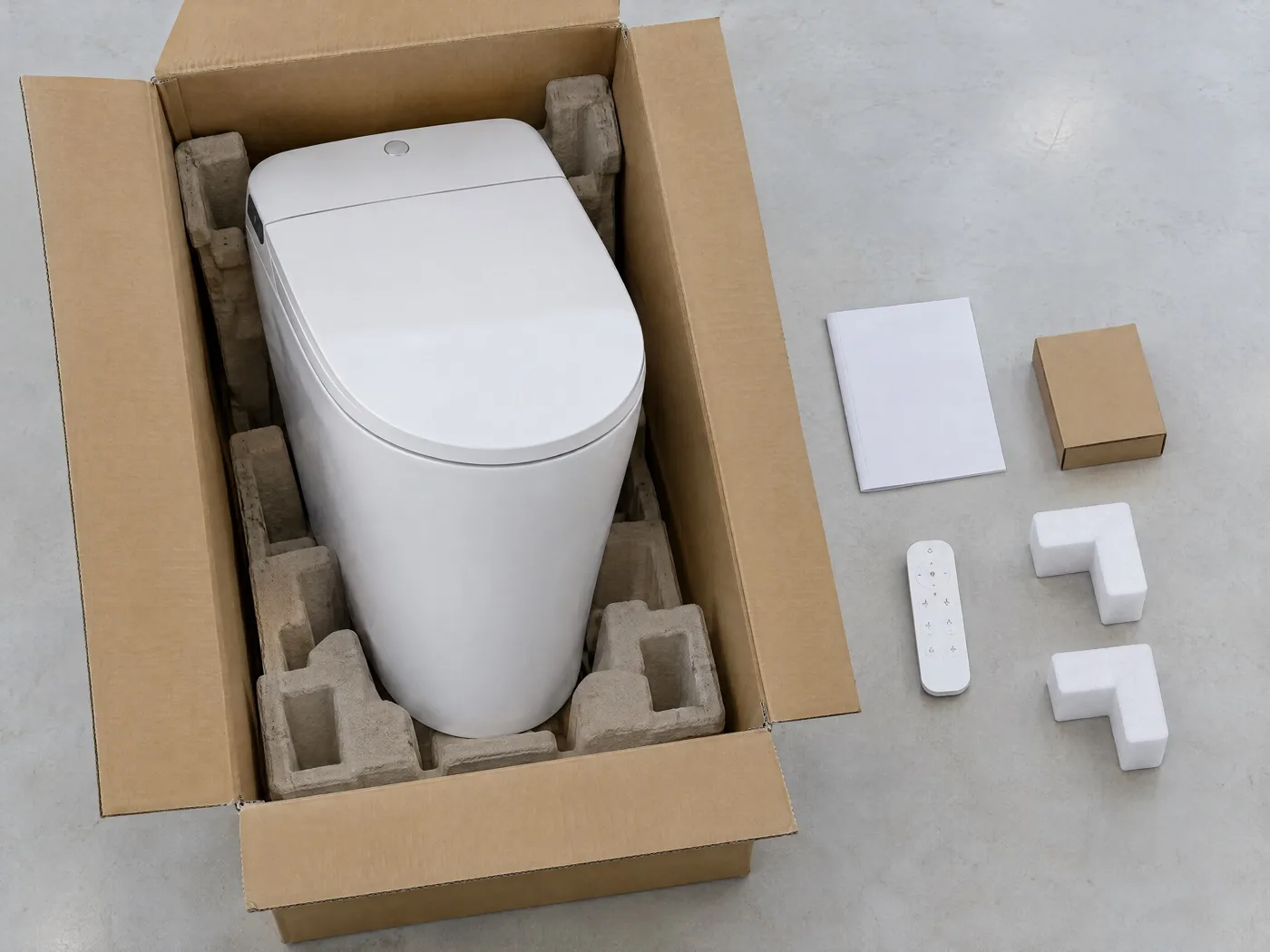
A production sample should represent the approved product and branding. Check the configuration, artwork, labels, accessories, documentation and packaging.
Record the approval before mass production. A photo of a carton is not a substitute for a signed sample or a written specification.
Step 8: Confirm production and delivery
Finalize commercial terms covering quantity, price, production scope, inspection, delivery responsibilities and after-sales support.
A reliable launch depends on a clear agreement, not just an attractive sample.
What Can Be Customized on a Private Label Smart Toilet?
Customization falls into several categories. Not every item is available for every product or order size.
1. Brand logo
Logo application is one of the most common private label requests. The location must suit the material, shape and product design.
Branding must not obscure safety warnings, required identification or technical labels. The application method should be reviewed for durability and appearance.
2. Retail packaging
Custom packaging can create a consistent branded presentation. Potential elements include:
- Brand colors
- Product photography
- Model name
- Feature descriptions
- Barcode placement
- Product identification
- Handling instructions
- Retailer contact information
The packaging still has to protect the ceramic and electronic components. A visually attractive carton is not sufficient if its protective structure is inadequate.
3. Product manuals and instructions
Branded documentation can improve the customer experience, but the manual must retain the correct installation, electrical safety, operating and maintenance instructions for the exact product.
Retailers should not replace approved technical information with generic marketing content.
4. Product configuration
Depending on the supplier and platform, selected functions may be configurable. Examples may include control interfaces, comfort options or other model-specific settings.
Any configuration change should be approved against the actual product and relevant documentation. It is an engineering decision, not a packaging decision.
5. Custom product design
More extensive ODM programs may involve changes to product shape or components. These projects can require engineering review, tooling, prototype testing and revised compliance documentation.
They should not be treated as equivalent to a simple logo change.
How Much Does Private Label Smart Toilet Customization Cost?
There is no universal private label smart toilet price. Cost depends on the base model, customization scope, order quantity, tooling, packaging, compliance work and delivery arrangement.
A useful approach is to separate the cost elements.
| Cost category | What it covers |
|---|---|
| Base product | Approved smart toilet configuration |
| Branding | Logo application and related work |
| Packaging | Custom printed cartons and protective packaging |
| Documentation | Approved manuals, labels and artwork |
| Tooling | New molds or manufacturing fixtures, when required |
| Product development | Engineering and prototype work |
| Testing and compliance | Applicable review or testing expenses |
| Freight | Shipping and handling |
| Import charges | Duties, taxes and customs-related expenses |
| After-sales allowance | Warranty and replacement-part planning |
Calculate total landed cost
For an imported private label program, the useful financial measure is total landed cost per unit.
A simplified planning formula is:
Landed cost per unit = product cost + customization + allocated tooling + freight + import charges + domestic handling
Retailers should also account for selling expenses, expected warranty costs, returns and other business overhead when evaluating margin.
Why the lowest unit price may not be the best offer
A lower initial product price may not compensate for inadequate documentation, unreliable supply, poor packaging or limited replacement-part support.
For a retailer building a long-term brand, consistency and serviceability can matter as much as the first purchase price. A cheap unit that generates returns can be more expensive than a better-supported model.
What Is the MOQ for Private Label Smart Toilets?
MOQ stands for Minimum Order Quantity. It is one of the first questions retailers ask, and one of the most frequently misunderstood.
There is an important distinction between ordering existing stock and ordering a customized production run.
Standard wholesale orders
Some suppliers allow retailers to order small quantities from existing inventory. Lavilys supports one-unit pilot or showroom orders for eligible A17 and A18 models available from US warehouse stock.
That allows a retailer to evaluate the product before expanding its assortment.
Private label orders
A customized program may have additional requirements. Custom carton printing, logo application, tooling and production setup can involve different minimum quantities.
The exact MOQ depends on the requested scope.
OEM and ODM development
More extensive engineering or custom-molding programs may have a different commercial structure. Development charges and order commitments should be defined after the technical requirements are reviewed.
A one-unit stock order should not be confused with a one-unit custom production commitment.
For Lavilys, private label and selected OEM requirements are reviewed by program. Scope, quantities and lead times are confirmed during quotation, not assumed from the stock-order policy.
Smart Toilet Requirements for the US Market
Technical compatibility is critical when sourcing smart toilets for the United States. A product can have the desired appearance and features and still be unsuitable for the intended installation.
Electrical voltage
The electrical configuration must match the destination market and the approved installation.
Many North American smart toilet applications use 110–120V-class electrical systems. Buyers should confirm the exact voltage range, frequency, rated power, grounding and electrical protection requirements for each model.
Do not assume that a 220V configuration is suitable for a US installation. The North American voltage requirements guide covers the circuit and grounding checks.
Rough-in compatibility
Rough-in is the distance between the finished wall and the center of the toilet’s floor drain. A nominal 12-inch rough-in is common in many US bathrooms, but not every property uses the same configuration.
Before choosing a model for a retail range, verify the exact supported rough-in and provide clear compatibility information to customers.
Flushing performance
Evaluate the documented flushing system and flush volume. Avoid relying only on broad claims such as “powerful flushing” or “water-saving.”
Where relevant, review model-specific performance and efficiency evidence. The installation requirements checklist covers the site conditions that affect performance.
Water pressure
Different smart toilets have different pressure requirements. Direct-supply configurations may require different inlet conditions from models with internal water storage.
Retailers should present the correct installation requirements to avoid selling a product that cannot work in the customer’s bathroom.
Certifications and regulatory documentation
For the US market, relevant requirements may involve plumbing compliance, electrical safety, electronic emissions and water-efficiency claims. These areas should be evaluated separately.
Depending on the product and intended sales market, buyers may need to review:
- cUPC or other applicable plumbing compliance records
- Relevant electrical safety listing documentation
- Applicable FCC documentation
- WaterSense labeling, where claimed
- Model and manufacturer identification
- Required installation and safety labels
A manufacturer’s certificate for one model does not automatically cover all related models. Private labeling or technical changes may also require review with the relevant certification body or compliance specialist.
The cUPC, WaterSense, UL and FCC guide explains how the scopes differ. For general certification information, see UL Solutions certification services and the International Association of Plumbing and Mechanical Officials. These external resources do not replace model-specific records or legal advice.
Product origin and labeling
US importers should also review applicable country-of-origin marking, product identification, customs and consumer-information requirements.
A private label does not change where a product was manufactured. Branding and origin claims must remain accurate. Where necessary, consult a qualified customs or product-compliance specialist before approving retail packaging.
Choosing Models for a Private Label Smart Toilet Range
A new retail brand does not need a large catalog. A smaller assortment with clearly defined differences may be easier to market and support.
Lavilys offers the A17 and A18 as complementary integrated smart toilet models. Both use a documented 110–130V configuration and a 305 mm rough-in, which can simplify staff training and installation conversations.
A17: core integrated smart toilet
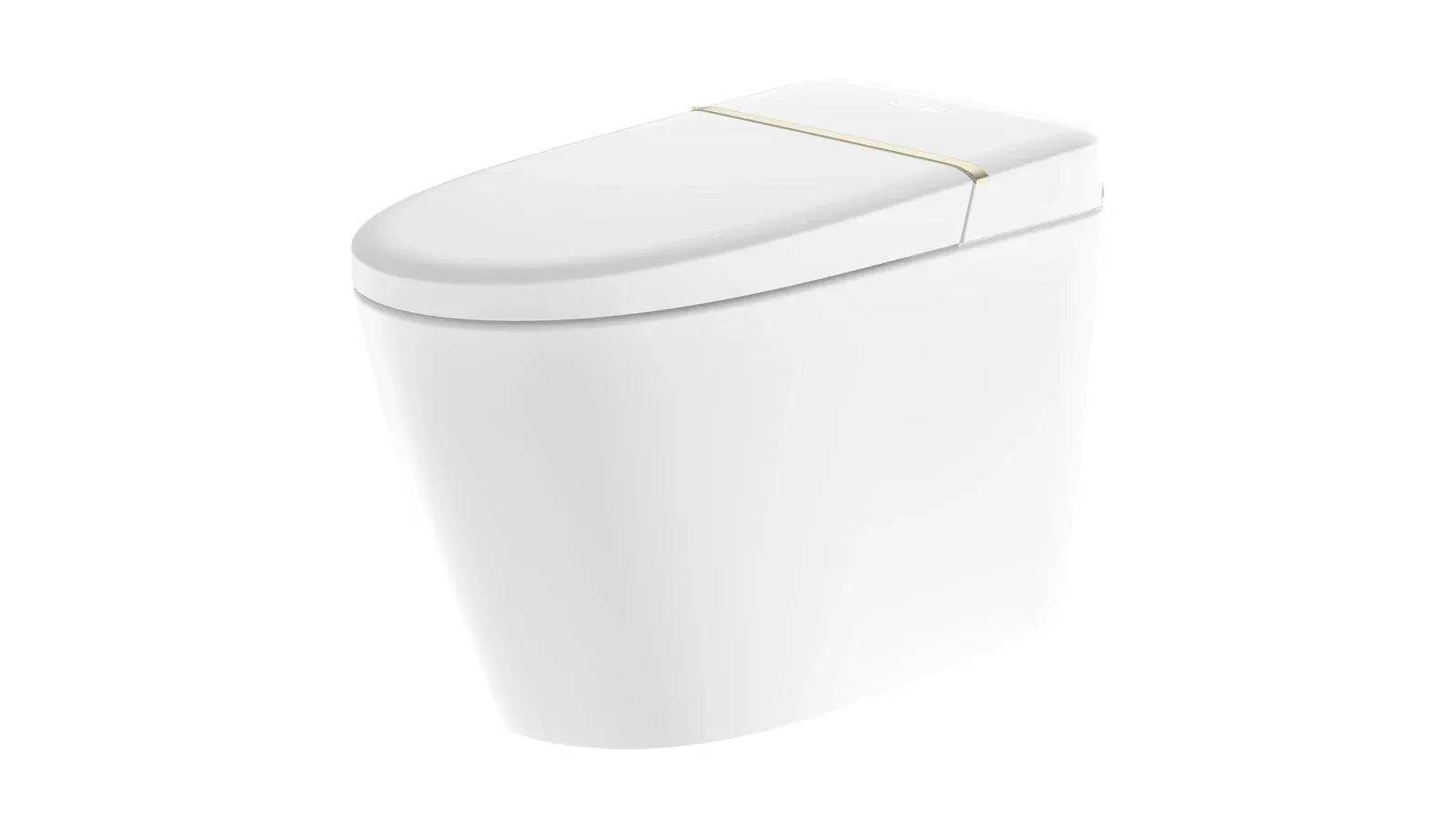
The Lavilys A17 is an integrated model with documented comfort functions, including:
- Electronic bidet washing
- Heated seat
- Warm-air drying
- Foot-sensor operation
- Remote and side controls
- Deodorization
- LED night light
The A17 can serve as a core smart toilet offering for a retailer entering the category.
A18: premium smart toilet with automatic lid
The Lavilys A18 shares core installation characteristics with the A17 but adds automatic lid operation.
Documented features include:
- Microwave-sensing automatic lid
- Foot-sensor controls
- Electronic bidet washing
- Heated seat
- Warm-air drying
- Remote and side controls
- Deodorization and night light
For a retailer, the automatic lid creates a clear premium differentiation without requiring a completely different installation platform.
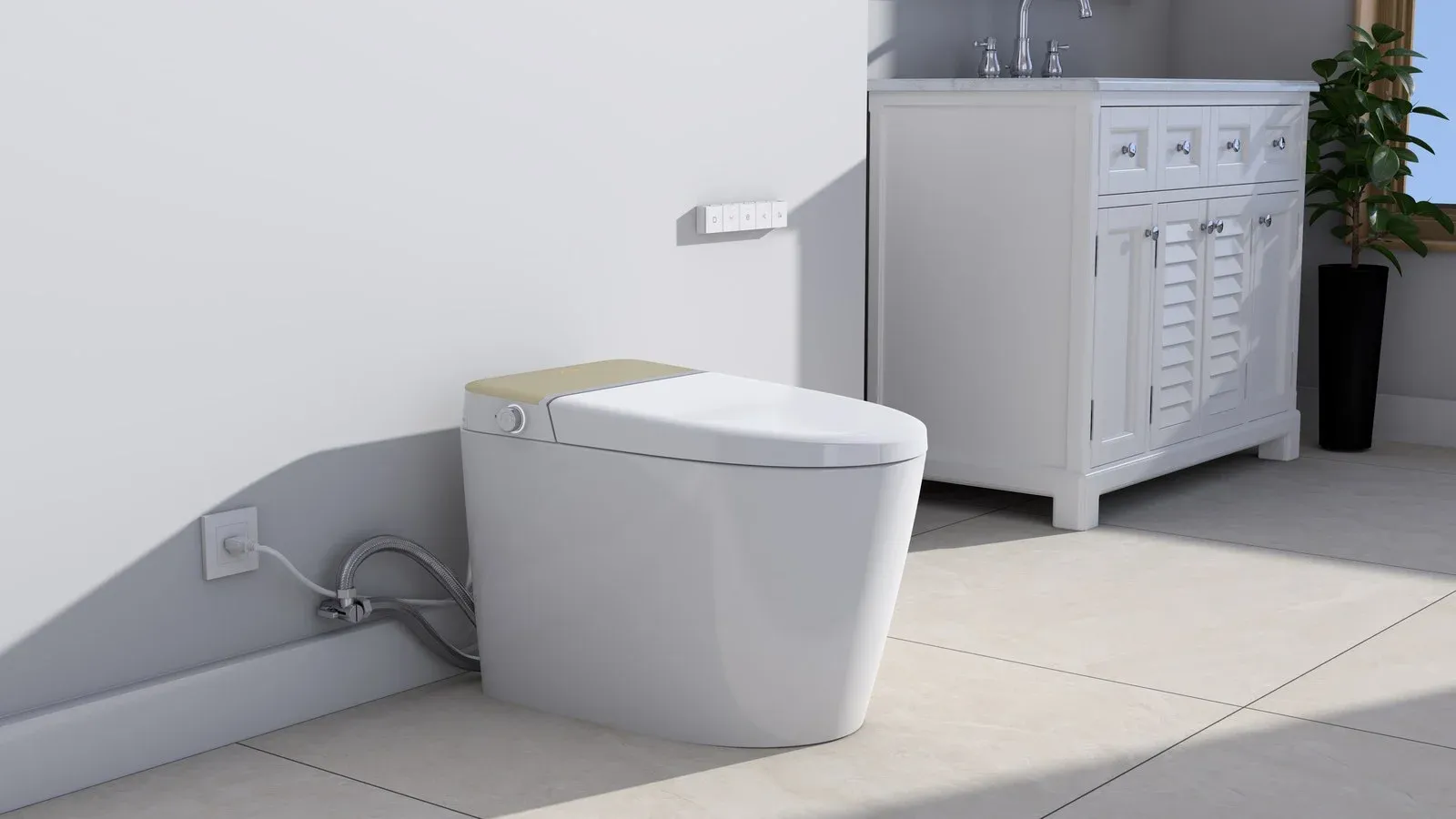
A17 vs A18: retail positioning example
| Feature | A17 | A18 |
|---|---|---|
| Integrated design | Yes | Yes |
| Electronic washing | Yes | Yes |
| Heated seat | Yes | Yes |
| Warm-air drying | Yes | Yes |
| Foot-sensor controls | Yes | Yes |
| Automatic lid | Not listed as standard | Yes |
| Voltage | 110–130V | 110–130V |
| Rough-in | 305 mm | 305 mm |
| Suggested positioning | Core comfort | Premium automation |
Illustrative retail positioning. Exact private label feasibility, model availability, product claims and configuration must be approved before launch.
Why a two-model strategy can work
A two-model range can make customer choices easier. The retailer can demonstrate the shared features and then explain the additional premium function.
Using models with similar installation requirements can also simplify staff training and customer support. Retailers should still verify final model documentation and replacement-part compatibility individually.
How Lavilys Supports US Bathroom Retailers
Lavilys supplies integrated smart toilets and electronic bidet seats for distributors, bathroom stores and project buyers.
For US retailers, support is built around product evaluation, wholesale supply and technical coordination.
Showroom pilot orders
Selected A17 and A18 models are available for low-volume evaluation from US warehouse stock, subject to current availability.
A retailer can start with a showroom unit before expanding inventory. A stock pilot is not the same as a custom production order, and the distinction matters when planning a private label launch. Check the smart toilet shipping weight and carton data before planning pallet or container quantities.
Mixed-model wholesale supply
Retailers can review A17 and A18 mixed-model orders. This supports a focused assortment without requiring every model to be stocked in large quantities at the initial stage.
Private label review
Lavilys can review qualified wholesale requests involving logo application, retail packaging and selected OEM requirements.
The final scope depends on model selection, artwork, quantity, tooling, technical feasibility and commercial approval. Lavilys does not publish a fixed private label MOQ or a standard customization package because the scope varies by request.
US warehouse coordination
Lavilys identifies warehouse operations on the US West Coast and East Coast for eligible domestic supply and replenishment.
Stock availability and delivery arrangements must be confirmed before placing an order.
Technical documents
Available resources include model specifications, manuals, installation information and selected certification records. Final document scope should always be matched to the exact product being ordered. Use the document library to request current model files.
After-sales and replacement parts
Lavilys coordinates troubleshooting and replacement-part identification for applicable products. These services can help retailers establish a clearer process for customer issues.
Learn more about wholesale smart toilets for US retailers or review Lavilys OEM and ODM capability.
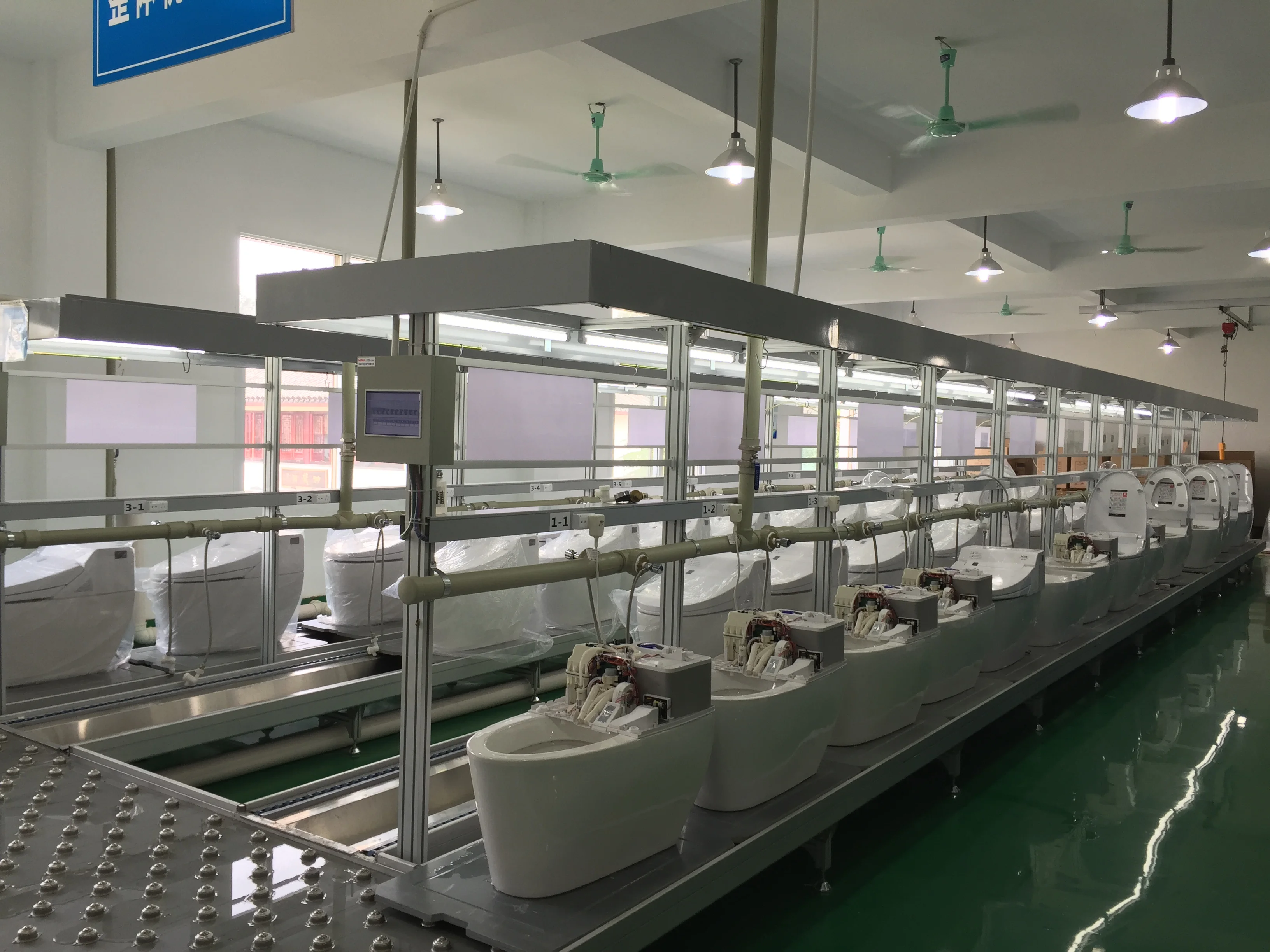
Private Label Smart Toilet Quality Control Checklist
Quality control should be defined before production begins. The buyer should understand what will be inspected, when and how nonconforming products will be handled.
1. Product identification
Check the exact model, approved configuration, branding and order reference.
2. Ceramic inspection
Review visible finish, cracks, chips, dimensional consistency and relevant fit requirements.
3. Flushing and washing functions
Verify the applicable flushing and bidet functions against the approved specification.
4. Electrical and control functions
Check heating, drying, sensor and control functions using approved test procedures.
5. Packaging and accessories
Verify that the correct accessories, remote controls, manuals and labels are included.
6. Branding accuracy
Check logo position, artwork, model names and approved text. A carton that looks correct on the front may have the wrong label on the side.
7. Shipping documentation
Confirm carton quantities, labels, shipping marks and packing records.
8. Final approval and records
Record the approved sample, inspection results and any agreed corrective actions.
For a private label program, consistency between the approved sample and the production shipment is particularly important. A buyer should not approve a production run from a photo of a different sample.
How to Plan Inventory and Replenishment
A private label brand depends on having products available when customers need them. Inventory planning should account for lead times, sales patterns, product mix and warranty requirements.
Start with a manageable assortment
Avoid committing to many models before understanding demand. A smaller range can simplify purchasing and staff training.
Separate samples from commercial inventory
Showroom units are useful for demonstrating features, but commercial inventory should be planned around actual customer demand.
Confirm lead time by supply route
Available US warehouse stock and factory production have different planning requirements.
Factory production may involve branding, packaging, inspection, export preparation and international transit. Customized products usually cannot be pulled from domestic stock. No single lead time applies to every order.
Plan for after-sales parts
A private label program should have a process for identifying and obtaining appropriate replacement components. Retailers need to support the products they sell over time, not just at the point of sale.
Review packaging and delivery
Smart toilets contain ceramic and electronic components that require careful handling. The packaging plan should account for product protection, transport conditions, warehouse handling and final delivery.
The packing and delivery process and after-sales support pages explain the related service scope.
Common Mistakes When Launching a Private Label Smart Toilet Brand
Several mistakes can undermine an otherwise promising launch.
Choosing products based only on price
A low purchase price does not guarantee a profitable program. Product compatibility, shipping damage, support needs and returns all affect total cost.
Ordering before testing a sample
Photographs and feature lists cannot fully demonstrate washing comfort, sensor response or installation quality. Evaluate a sample before committing to volume.
Ignoring model-specific certifications
Compliance documentation should be reviewed for the exact product and configuration. Do not assume that a brand-level claim covers a customized model.
Confusing standard MOQ with custom MOQ
Existing inventory and private label production may have different quantity requirements. Ask for the MOQ associated with the specific customization request.
Overcomplicating the product line
Too many similar models can make inventory and customer support harder. A clear assortment usually provides a better starting point.
Failing to plan after-sales service
Smart toilets contain electronic and mechanical components. Retailers should understand warranty procedures, replacement-part options and troubleshooting responsibilities before launch.
Making unsupported product claims
Avoid advertising certifications, hygiene benefits or water-efficiency performance without appropriate evidence. Marketing content should match the approved product.
Private Label Smart Toilet RFQ Checklist
A Request for Quotation should provide enough information for the supplier to evaluate the project accurately.
For a US retail private label program, consider including:
| Information | What to provide |
|---|---|
| Company profile | Retailer, distributor, showroom or online store |
| Target market | US states or distribution region |
| Product category | Integrated smart toilet or electronic bidet seat |
| Reference models | A17, A18 or another model for review |
| Required functions | Washing, heating, drying, automatic controls |
| Electrical specification | Required voltage and frequency |
| Rough-in | Required installation dimension |
| Branding | Logo, model naming and label requirements |
| Packaging | Retail carton, artwork and shipping marks |
| Quantity | Sample quantity and estimated production order |
| Compliance | Required certifications and documentation |
| Delivery | US warehouse or factory shipment requirements |
| Schedule | Requested sample and launch timing |
| After-sales | Warranty, parts and technical support requirements |
Detailed requirements at the start reduce unnecessary revisions later. A supplier cannot quote a private label program accurately from a single sentence and a logo file.
Frequently Asked Questions About Private Label Smart Toilets
What is a private label smart toilet?
A private label smart toilet is a product supplied through a manufacturer or sourcing partner and sold under a retailer’s own brand, subject to an approved branding and commercial arrangement.
Can I put my logo on a smart toilet?
Logo application may be available for qualified programs. The exact location, method, quantity and cost must be reviewed with the supplier.
What is the difference between private label and OEM smart toilets?
Private labeling generally focuses on selling an approved product under a retailer’s brand. OEM arrangements may include a broader agreed product specification. The exact scope depends on the commercial agreement.
What is the MOQ for OEM smart toilets?
There is no universal MOQ. Standard inventory orders, private label packaging and engineering customization can have different minimum quantities.
Can I order one smart toilet before starting a private label program?
Some suppliers support pilot orders from existing inventory. Lavilys offers eligible one-unit showroom evaluation orders from available US stock. That does not mean a fully customized one-unit production order is available.
Can I customize the packaging?
Custom retail packaging may be available depending on the model, quantity, artwork and approved production scope.
Do private label smart toilets need certification for the US market?
Products must meet the applicable requirements for their category and market. Buyers should verify plumbing, electrical, electronic and other relevant documentation for the exact model and any approved changes.
Can existing product certifications be used after rebranding?
Not automatically. The effect of private labeling on certification and identification records should be reviewed with the manufacturer and the relevant certification or compliance parties.
How long does OEM smart toilet production take?
Lead time depends on the model, customization scope, tooling, sample approval, order quantity, production availability and shipping method. A confirmed schedule should be provided during quotation.
Can I mix smart toilet models in one wholesale order?
Some suppliers support mixed-model orders. Lavilys reviews A17 and A18 mixed-model wholesale supply, subject to availability and order requirements.
Can private label smart toilets be shipped from a US warehouse?
Existing approved inventory may be available through US warehouses. Customized products may require a separate factory production and delivery arrangement. Confirm the supply route for each order.
What should I ask an OEM smart toilet supplier?
Ask for model specifications, sample options, customization scope, MOQ, applicable certifications, packaging requirements, quality-control procedures, lead times, warranty terms and replacement-part support. The resource FAQ covers common document and sample questions.
Conclusion: Build a Private Label Smart Toilet Brand on a Reliable Product Foundation
Private label smart toilets can help US bathroom retailers create differentiated products and a more consistent brand identity.
However, a successful program requires more than customized packaging.
Retailers should begin with a clear target market, select suitable models, evaluate real samples, confirm technical compatibility and review applicable compliance documentation.
Branding, quality control, packaging, logistics and after-sales support all belong in the sourcing plan.
For a first smart toilet range, an existing documented platform may be more practical than an extensive custom development project. More advanced OEM or ODM customization can follow when the brand has clearer requirements and an established commercial plan.
The strongest private label program combines a recognizable brand with reliable product performance, accurate technical information and dependable supply support.
Start Your Private Label Smart Toilet Program with Lavilys
Lavilys works with bathroom retailers, distributors and other professional buyers seeking smart toilet supply for the North American market.
The range includes integrated smart toilets with core comfort functions and premium automatic features.
Lavilys can review qualified requests involving:
- A17 and A18 product evaluation
- Private label logo requirements
- Retail packaging customization
- Selected OEM and ODM requirements
- Sample and showroom orders
- Model-specific technical documentation
- US warehouse and factory supply options
- Replacement-parts and after-sales coordination
Customization availability, order quantities, tooling and lead times are confirmed according to the requested program.
Request an OEM or private label quotation
To begin, share:
- Company name and target market
- Preferred smart toilet models
- Expected initial and annual order quantities
- Logo and packaging requirements
- Required functions and technical specifications
- Certification or compliance requirements
- Preferred delivery destination
- Target launch schedule
Discuss your private label smart toilet requirements, or contact the Lavilys team to review OEM and ODM opportunities.
Related pages
Referenced models
Products discussed in this article
A17 Integrated Smart Toilet
U-shaped integrated smart toilet with siphon jet flushing, foot-sensor operation and a full comfort function set — CUPC, UL and FCC certified for the North American market.
View specifications Smart ToiletA18 Integrated Smart Toilet
A17 sibling with microwave-sensing auto lid and foot-sensor operation — adds hands-free open/close for hospitality and premium residential use.
View specificationsNext step
Send us the project details
Share the market, quantity, site conditions and documentation you need. Our technical team confirms configuration and compliance scope before anything is quoted.