
Technical Guide / 22 min read
How Do Automatic Flush Toilets Work? Sensors Explained
How do automatic flush toilets work? Learn about sensors, flushing systems, water pressure, common issues and smart toilet selection for projects.
Key takeaways
- A sensor decides when the toilet should flush; the valve, tank or pump and the bowl design determine how the flush performs.
- Automatic flushing, foot-sensor flushing and automatic lid opening are separate functions that may use different sensors and controls.
- Automatic activation does not guarantee water savings; rated flush volume and verified performance determine efficiency.
- Power supply, backup flushing, water pressure and rough-in must be confirmed per model before a project order.
B2B sourcing checklist
Move from research to a model-specific quotation
Use the resources below to confirm specifications, compliance scope, order terms and delivery timing before requesting a quote.
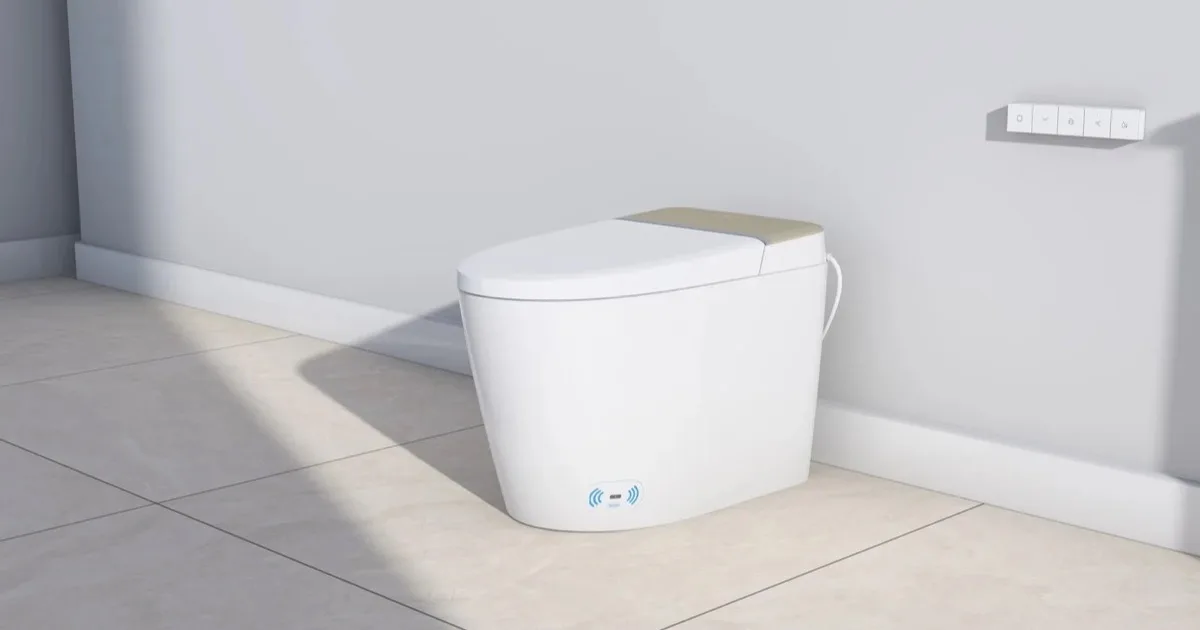
Automatic flush toilets are becoming a familiar part of modern bathrooms. From airports and commercial restrooms to hotels, apartments and premium homes, these fixtures use sensors and electronic controls to activate flushing without a conventional handle.
Many integrated smart toilets also combine automatic flushing with heated seating, bidet washing, warm-air drying and automatic lid opening. That combination can make the control logic harder to understand than a simple handle-and-valve toilet.
How does an automatic flush toilet know when to flush? Do all automatic toilets use the same sensing technology? And why can two fixtures that look identical behave differently in the same building?
An automatic flush toilet uses a sensor or electronic control system to recognize an operating condition, such as a user leaving the seat, and then activates the toilet’s flushing mechanism. The sensor determines when the flush should happen. The plumbing and flushing mechanism determine how water reaches the bowl and removes waste.
That distinction matters for homeowners, distributors, installers, hotel operators and project buyers. A sensor that triggers reliably cannot compensate for inadequate water pressure, and a strong flush cannot fix a sensor that fires at the wrong time.
This guide explains the sensing methods used in modern automatic toilets, the flushing systems they control, the power and water requirements that determine feasibility, and the checks a buyer should complete before specifying a model. For model-level service questions, the smart toilet troubleshooting guide covers safe first checks.
What Is an Automatic Flush Toilet?
An automatic flush toilet can activate its flushing cycle through a sensor or electronically controlled process without requiring the user to press a conventional flush handle.
Unlike a manually operated toilet, an automatic model detects a specific condition and sends a command to its flushing system. Depending on the design, flushing may occur after a person stands up, leaves a sensor’s detection area or completes a specified interaction.
Some systems also provide foot-sensor activation. A foot sensor still requires an intentional user action, but it enables flushing without hand contact.
Automatic toilets fall into two broad categories.
Commercial Sensor-Flush Toilets
These are common in public restrooms and other commercial environments. They often use a wall-mounted or fixture-mounted sensor connected to an electronically operated flushing valve.
Many commercial systems use infrared sensing to recognize a user and initiate flushing after the person leaves the detection area. The valve, fixture and sensor are often separate components selected as a system.
Integrated Smart Toilets
An integrated smart toilet combines the ceramic body with electronic comfort and control systems. Depending on the model, automatic flushing may work alongside bidet washing, heated seating, warm-air drying, automatic lids and other functions.
The flushing mechanism may use a direct water supply, concealed water storage or an assisted-flushing design. The Lavilys integrated smart toilet range includes several of these configurations across different pressure classes.
The two categories can both provide automatic flushing, but they do not necessarily use the same sensors, plumbing systems or electronic controls. A commercial flushometer and a residential integrated toilet should not be specified from the same checklist.
How Does an Automatic Flush Toilet Work?
Although different products use different technologies, many automatic flushing systems follow five general steps.
Step 1: The Sensor Detects the User
A sensor identifies a user or a relevant operating condition.
For example, a commercial infrared sensor may recognize a person positioned in front of the toilet. An integrated smart toilet may use a seat sensor to determine whether the seat is occupied. Other systems use foot sensors or additional proximity controls.
The selected detection method depends on the toilet’s design. A sensor designed to detect a standing user at a urinal is not interchangeable with a seat sensor designed to confirm that someone is seated.
Step 2: The Control System Evaluates the Signal
The sensor communicates with an electronic control module. This module determines whether the conditions for flushing have been met.
Many systems use timing or detection rules to reduce accidental activation. For instance, a toilet may require the user to remain within its sensing area for a minimum period before recognizing an actual use event. The required detection time and delay vary by manufacturer.
Step 3: The User Leaves or Activates the Control
After the user stands up or leaves the detection area, the control system may prepare to flush. A foot-sensor toilet instead may respond to a deliberate foot movement or touch near the sensor.
This distinction is important because not every touchless toilet uses fully automatic flushing. Some provide sensor-assisted manual activation, in which the user must request the flush.
Step 4: The Flushing Mechanism Activates
Once the control system confirms the trigger, it sends a command to the flushing mechanism. Depending on the toilet, this may operate an electronic valve, a motorized mechanism, a pump or another flushing actuator.
Water enters the bowl according to the design of the plumbing system. The sensor’s job ends at the command; it does not pressurize the water or determine the flush profile.
Step 5: The Toilet Completes the Flush
The flushing system delivers the required water volume and flow to remove waste. The control module then completes the operating cycle and returns to a ready state.
Some models have an additional delay before another automatic flush can occur. The exact sequence, timing and response behavior should be verified using the product manual.
What Types of Sensors Are Used in Automatic Toilets?
Automatic toilets can use several sensing technologies. The differences affect how the toilet recognizes the user and how reliably it operates in different environments.
1. Infrared Sensors
Infrared sensing is widely used in commercial automatic flushing systems. An active infrared sensor emits infrared light and detects reflected light from an object or person.
The electronic controller uses the detection signal to determine whether someone is within the operating area. In certain commercial systems, flushing begins after the person leaves the sensing range and an appropriate delay has elapsed.
Advantages
Infrared sensing can provide:
- Touchless user detection
- Automated operation
- Adjustable sensing behavior on supported systems
- Compatibility with commercial flushing equipment
Limitations
Sensor performance may be affected by the installation environment, nearby reflective surfaces, contamination or unsuitable detection settings. A sensor aimed at a reflective door or a nearby partition may read movement that is not a user.
The system should be configured according to the manufacturer’s instructions.
Best Applications
Infrared sensor-operated flushing is common in commercial restroom fixtures, including those used in offices, transportation facilities and other high-traffic environments.
However, infrared sensing is not the only technology available for automatic toilets.
2. Seat Occupancy Sensors
Many integrated smart toilets include a sensor that identifies when a person is seated. The sensor can help manage functions such as bidet washing and automatic flushing.
In an automatic flushing configuration, the system may recognize when the user leaves the seat and then initiate a flush after a programmed interval.
Advantages
Seat sensing can support:
- Occupancy-based flushing
- Control of electronic washing functions
- Prevention of unintended nozzle activation
- Integration with other smart toilet features
Limitations
The sensing system must reliably recognize normal user seating. Depending on the design, unusual seating positions or interference with the sensing area may affect detection.
Buyers should test the system under representative conditions. A seat sensor that works for a lightweight adult may behave differently for a child or a user who shifts position.
3. Foot Sensors
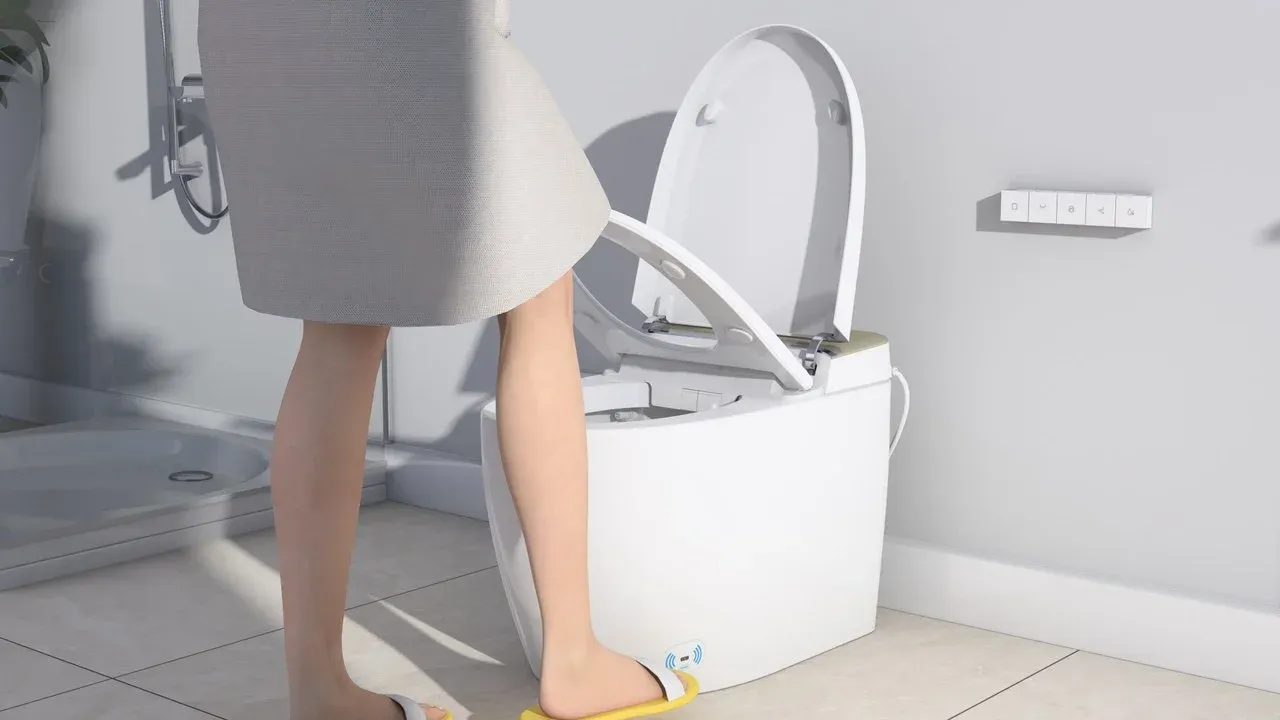
Foot sensors allow users to activate selected toilet functions without using their hands. Some designs require the user to bring a foot close to a sensor; other models use a touch-operated sensor near the lower part of the toilet.
On compatible smart toilets, the foot control may initiate flushing or operate the lid and seat.
Advantages
Foot-sensor operation is useful when:
- Users prefer not to touch a control panel.
- A premium touchless experience is desired.
- The toilet provides multiple control methods.
- The application benefits from an alternative to a handheld remote.
Limitations
A foot sensor is not necessarily equivalent to fully automatic flushing. Users may still need to make a deliberate movement to activate the function.
Sensor placement and the control sequence should be checked before choosing a model.
4. Proximity and Microwave Sensors
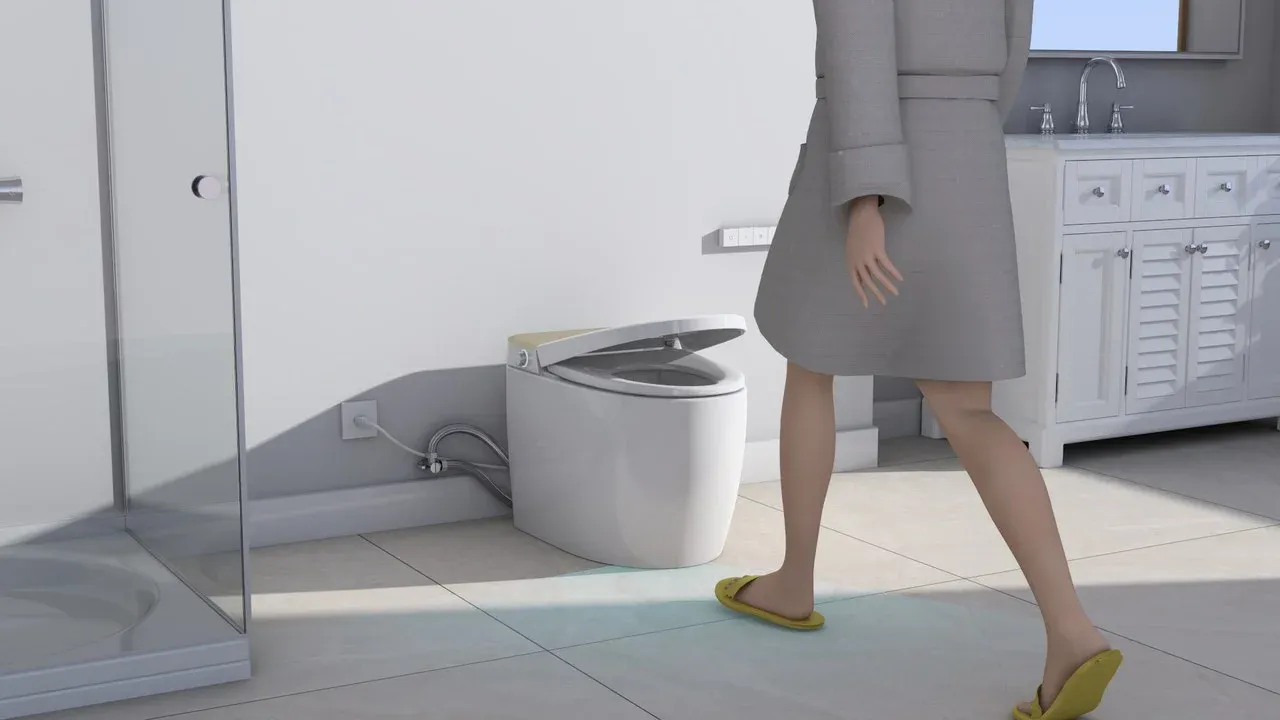
Some premium smart toilets include proximity or microwave-sensing technology. These systems may detect when a person approaches the fixture.
However, it is important to distinguish automatic lid sensing from automatic flushing.
For example, the Lavilys A18 Integrated Smart Toilet includes microwave-sensing automatic lid operation and separate flushing controls, including automatic, remote-control and foot-sensor functions. The microwave-sensing feature is documented for the automatic lid system. It should not automatically be described as the flushing sensor.
The actual sensor-to-flush control sequence must be confirmed from the applicable model documentation.
Automatic Flushing vs Foot-Sensor Flushing vs Manual Flushing
These terms are often used together in smart toilet marketing, but they describe different ways to activate a flush.
| Flushing method | How it works | User action |
|---|---|---|
| Automatic flushing | Control system activates a flush after a detected event | May require no deliberate flush action |
| Foot-sensor flushing | Foot activates a sensor near the fixture | Intentional foot movement or touch |
| Remote-control flushing | Wireless remote sends a flush command | Press a remote button |
| Side-button flushing | Local button or control activates a flush | Press or operate the control |
| Mechanical flushing | Physical mechanism releases flushing water | Operate a handle or button |
A well-designed integrated smart toilet may offer multiple control options. For hotels and residential projects, having more than one approved control method can be useful. If an automatic feature is unavailable or disabled, an alternative control may allow normal operation.
However, the availability of backup controls depends on the model. Do not assume that a foot sensor, remote or emergency flush is included without checking the specification.
How Does the Flushing Mechanism Work?
A sensor only tells the toilet when to initiate flushing. It does not determine whether the toilet uses gravity, stored water, a direct water supply or a pump-assisted mechanism.
This is why automatic flushing must be evaluated separately from actual flushing performance.
Gravity-Based Tank Flushing
A conventional tank stores water that is released into the toilet bowl during a flush. Gravity helps move water through the system. An electronic actuator can automate the flushing mechanism in compatible designs.
The toilet still depends on its tank and bowl engineering for flushing performance.
Direct-Supply Flushing
A direct-supply system obtains flushing water from the building’s plumbing supply. It may use an electronically operated flushing valve or another engineered mechanism.
For these systems, water pressure and flow are important. The supply must meet the specific product’s operating requirements. A sensor that triggers correctly cannot produce a strong flush from a supply that cannot deliver the required flow.
Built-In Tank Smart Toilets
Some integrated smart toilets contain a concealed water reservoir. An electronic controller can activate the flushing system while the stored water supplies the flush.
This type of product may resemble a tankless toilet from the outside. However, the internal architecture is different. The tankless and concealed-tank comparison explains why the distinction affects pressure requirements and installation planning.
Assisted-Flushing Systems
Other smart toilets incorporate pump-assisted or specialized siphonic flushing mechanisms. These designs may be intended to support particular operating conditions.
The performance depends on the system, available supply, water volume and product engineering. Assistance does not remove the need to confirm the supply conditions; it changes the range within which the fixture can operate.
Do Automatic Flush Toilets Need Electricity?
Most electronically operated automatic flushing systems require an electrical power source. However, the type of power supply varies.
Some commercial sensor-flush systems use replaceable batteries. Others use a hardwired electrical supply.
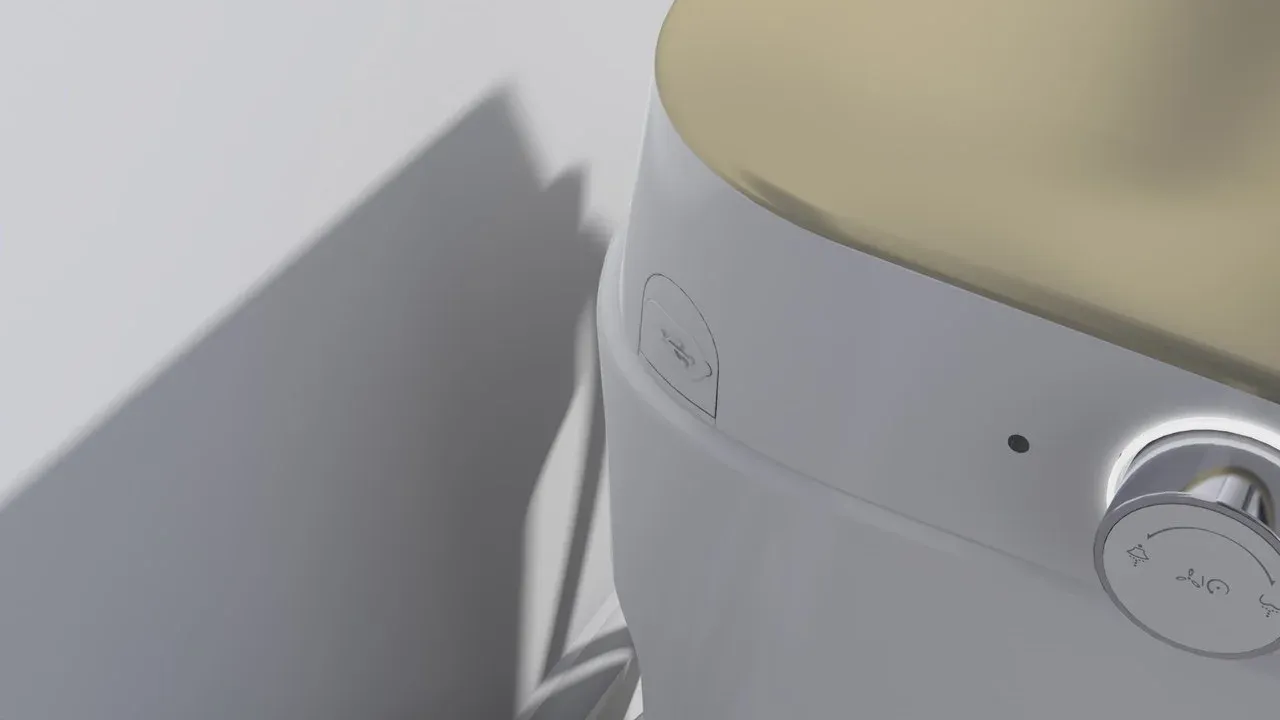
Integrated smart toilets commonly require a mains electrical connection because they also power bidet washing, water heating, seat heating, drying and electronic controls. The North American voltage guide covers the circuit and grounding checks for North American models.
What Happens During a Power Outage?
Not every automatic toilet behaves the same way without power. Some models include a mechanical override, battery-assisted emergency flushing or another approved backup method. Others may lose their electronic flushing capability until power is restored.
Buyers should verify:
- Normal power requirements
- Backup flushing availability
- Required batteries or accessories
- Manual override procedures
- Functions unavailable without electricity
A product should not be advertised as capable of power-outage flushing unless the exact configuration supports it.
Do Automatic Flush Toilets Save Water?
Automatic flushing and water efficiency are separate features. A toilet that activates without touching a handle does not automatically use less water. Water efficiency depends on the flushing mechanism, rated flush volume and actual operation.
For example, the U.S. Environmental Protection Agency’s WaterSense program identifies qualifying toilet products that meet water-efficiency and flushing-performance criteria. WaterSense-labeled toilets within applicable categories use no more than 1.28 gallons per flush and meet independent certification requirements. That is approximately 20% less than the federal standard of 1.6 gallons per flush.
However, the presence of an automatic sensor does not establish WaterSense eligibility or certification. Commercial fixtures are evaluated under a separate WaterSense commercial toilet program, and a quoted flush volume alone does not prove certification.
Why Sensor Accuracy Matters
A poorly configured sensing system may flush unnecessarily. Incorrect sensing-range settings or environmental interference could contribute to unwanted activation.
Repeated unintended flushing increases water consumption. For this reason, buyers should evaluate both flush volume and sensor reliability. A model rated at an efficient flush volume can still waste water if it flushes twice per use.
What About Dual-Flush Systems?
Some toilets offer separate full-flush and reduced-flush modes. The actual control method and water volumes depend on the model.
Do not assume that an automatic toilet automatically selects the correct flush volume based on the type of waste. Such functions should be claimed only when supported by the exact product documentation.
Benefits of Automatic Flush Toilets
Automatic flushing can provide several practical benefits when the system is appropriately designed and installed.
1. Reduced Hand Contact
Automatic flushing reduces the need to touch a conventional flush handle. This can be attractive in shared bathrooms, hotel guestrooms and premium homes.
However, reduced contact does not eliminate the need for regular cleaning.
2. Convenient Bathroom Operation
Automatic controls make flushing less dependent on a manual action. When combined with bidet washing, heated seating and other smart toilet functions, automatic flushing can contribute to a more convenient bathroom experience.
3. Premium User Experience
Touchless technology can help differentiate a modern bathroom design. For residential and hospitality projects, an integrated smart toilet with automatic operation may support the property’s intended level of comfort and convenience.
4. Multiple Control Options
Some integrated models provide automatic, foot-sensor, remote and side-control flushing. This gives users alternative ways to operate the fixture.
The exact combination varies by model.
5. Potential Operational Benefits
For hotels and large residential properties, standardized electronic toilets may simplify the user experience across rooms. However, sensor systems also create additional maintenance requirements.
Facility managers should evaluate reliability, cleaning procedures, replacement parts and technical support. The after-sales support programme explains how model records and spare-parts planning reduce downtime.
Disadvantages and Limitations of Automatic Flushing
Automatic flushing is useful, but it is not ideal for every situation.
Sensor Interference
Some sensing technologies can be affected by the physical environment. Incorrect sensing range or contamination may contribute to unexpected operation.
Electrical or Battery Dependence
Electronic controls require an appropriate source of power. Battery-powered commercial systems need battery maintenance, while mains-powered smart toilets require compatible electrical installations.
Higher Equipment Complexity
Automatic systems introduce sensors, electronic controllers and powered actuators. These components may require more specialized troubleshooting than a conventional manual flushing mechanism.
Accidental Activation
If a system incorrectly detects use or departure, it may flush unnecessarily. Buyers should check whether the model provides appropriate settings and reliable detection.
Increased Procurement Considerations
A project buyer must review both flushing performance and sensor behavior. The correct model should match the installation site, the intended users and the maintenance resources available.
Automatic Flush Toilet vs Traditional Toilet
| Feature | Automatic flush toilet | Traditional manual toilet |
|---|---|---|
| Flush activation | Sensor or electronic control | Mechanical handle or button |
| Hand contact for flushing | May be unnecessary | Usually required |
| Power requirement | Depends on the electronic system | Usually none |
| Flushing water consumption | Depends on the model | Depends on the model |
| Sensor maintenance | May be required | Not applicable |
| Control electronics | Usually present | Usually absent |
| Installation requirements | Plumbing plus applicable power requirements | Primarily plumbing |
| Maintenance complexity | Can be higher | Generally simpler |
| Common applications | Commercial, modern residential, hospitality | Residential and commercial |
Neither option is universally superior. A standard manual toilet can be practical, economical and reliable. An automatic flush toilet may be more suitable when touchless convenience and advanced controls are priorities.
Lavilys Automatic Flush Smart Toilet Examples
Lavilys provides integrated smart toilets with different automatic and manual control configurations. The following examples show how flushing functions and installation requirements vary between models.
Lavilys A18: Automatic and Foot-Sensor Flushing
The Lavilys A18 is an integrated smart toilet designed for North American residential and hospitality applications.
Its published specifications include:
- Automatic flushing
- Remote-control flushing
- Foot-sensor flushing
- Microwave-sensing automatic lid
- Heated seat
- Warm-air drying
- Bidet washing functions
- Siphon jet flushing
Important technical specifications include:
| Specification | A18 |
|---|---|
| Voltage | 100–130V AC, 50/60 Hz |
| Rough-in | 305 mm / 12 in |
| Maximum flush volume | 4.8 L / 1.27 GPF |
| Minimum flush volume | 4.0 L / 1.06 GPF |
| Static water pressure | 0.15–0.75 MPa |
| Controls | Automatic, remote, foot sensor |
The A18 demonstrates how several contactless functions can be combined within one integrated product. However, the automatic lid sensor and flushing controls should be treated as separate technical functions.
Lavilys W1: Automatic Induction and Foot-Sensor Control
The Lavilys W1 offers an alternative integrated smart toilet design.
Its product information includes:
- Automatic lid induction
- Foot-sensing flush
- Side knob
- Wireless remote control
- Jet siphon flushing
- Bidet washing
- Heated seating and warm-air drying
The W1 is documented with a 110V AC ±10%, 50/60 Hz configuration and 300 mm or 400 mm rough-in options. The range includes different tank and non-tank configurations with different water-pressure requirements.
For project buyers, this shows why flushing controls and plumbing compatibility must be reviewed together.
Lavilys 6293: Integrated Automatic Flushing
The Lavilys 6293 is another integrated smart toilet with electronic flushing functions.
Its published information documents automatic flushing, foot-sensor operation, remote control and a side rotary knob. The product also includes adjustable washing, instant water heating, a heated seat and warm-air drying.
The 6293 is documented with a 300 mm rough-in and a 4.8 L flush volume. Its pressure requirements depend on whether the selected configuration includes a built-in water tank.
Compare the Models
| Feature | A18 | W1 | 6293 |
|---|---|---|---|
| Automatic flushing | Yes | Foot-sensing flush; automatic lid induction | Yes |
| Foot-sensor flushing | Yes | Yes | Yes |
| Remote control | Yes | Yes | Yes |
| Side control | Yes | Yes | Yes |
| Automatic lid | Yes | Yes, documented configuration | Yes |
| Rough-in | 305 mm | 300 / 400 mm | 300 mm |
| Electrical configuration | 100–130V AC | 110V AC ±10% | 110V AC ±10% |
This comparison reflects the available published model records. Sensor configurations, electrical ratings, approvals and available options should be confirmed for the exact product being ordered.
Explore the Lavilys smart toilet collection for further model information, or review the certification guide before comparing compliance claims.
How to Choose Automatic Flush Toilets for Hotels and Apartments
Automatic flush toilets can support both residential and commercial projects, but selection criteria vary.
Hotels and Hospitality
Hotels should prioritize:
- Intuitive guest controls
- Reliable flushing
- Easy cleaning
- Consistent function settings
- Maintenance access
- Replacement-part support
Automatic flushing can help create a premium guest experience. However, systems should be easy to operate even for guests unfamiliar with smart toilet technology. A manual or alternative flushing control may be valuable.
The hotel smart toilet specification guide covers tiered room packages and maintenance planning, and the hotel project programme explains how Lavilys supports multi-room hospitality orders.
Apartment Developments
For multi-family residential projects, standardized installation requirements are especially important. Buyers should confirm electrical supply, rough-in, water pressure, plumbing layouts and model configurations across the development.
If different buildings or floors have different water-pressure conditions, separate technical assessments may be necessary. The construction project support programme covers phased delivery and site coordination.
Bathroom Distributors and Retailers
Distributors should select models that demonstrate clear customer benefits. A product range may include a model with basic electronic comfort features and another with premium automatic flushing and lid operation.
Showroom demonstrations can help buyers understand the distinction between automatic flushing, foot-sensor flushing and automatic lid controls. The distributor programme covers assortment planning and replacement-parts support.
Commercial Public Restrooms
Public restroom projects may require dedicated sensor-operated flushometer systems rather than integrated residential-style smart toilets. The two product categories have different installation, service and regulatory considerations.
Buyers should evaluate the appropriate fixture category for the actual use environment. A residential integrated toilet is not a substitute for a commercial flushometer specification simply because both are described as automatic.
8 Things to Check Before Buying Automatic Flush Toilets in Bulk
For distributors, contractors and property developers, the following items should be reviewed before purchase approval.
1. Confirm Sensor Technology
Ask whether the product uses infrared detection, seat occupancy, foot sensing or another technology. Understand which sensor controls which function.
2. Verify Flushing Performance
Request the documented flushing mechanism and flush volume. Where appropriate, review available performance-testing evidence.
3. Check Water Supply Requirements
Confirm static pressure, operating pressure or flow requirements and the supply connection. For low-pressure applications, investigate compatible tank-equipped configurations.
4. Verify Electrical Compatibility
The product must match the destination market’s electrical supply and applicable installation requirements. For North American installations, verify grounding, protective devices, circuit requirements and electrical documentation.
5. Check Alternative Flushing Controls
Determine whether the toilet can also flush through a side control, remote, foot sensor or documented backup method. Do not assume emergency flushing is included.
6. Evaluate Sensor Settings and Reliability
Ask whether sensing behavior can be configured and how false activations are addressed. For commercial applications, a representative pilot installation can help evaluate actual performance.
7. Review Certification Documents
Request model-specific documents relevant to the intended market. Plumbing compliance, electrical safety, electromagnetic compatibility and water-efficiency certification are separate considerations.
A quoted gallons-per-flush figure does not establish WaterSense certification.
8. Plan Maintenance and Spare Parts
Confirm the availability of compatible replacement parts, including sensors and electronic control components where applicable. A clear warranty and after-sales process can reduce long-term procurement risk.
For broader installation guidance, read the Lavilys smart toilet installation requirements checklist.
Common Automatic Flush Toilet Problems
Although automatic flushing offers convenience, problems may occur. The smart toilet troubleshooting guide covers safe checks in detail; the notes below focus on automatic-flush behavior.
Automatic Flush Does Not Activate
Possible causes include disabled settings, incorrect sensor detection, inadequate power or a flushing-system issue. Start by reviewing the model’s operating instructions and approved controls.
Toilet Flushes Without Being Used
Possible causes include sensor interference, configuration issues or a model-specific maintenance-flush function. Check the user manual before assuming a component has failed.
Foot Sensor Does Not Respond
Confirm that the feature is enabled and the foot action matches the documented operating procedure. Check the accessible sensor area for dirt or obstruction.
Automatic Flush Is Weak
Weak flushing may be related to supply pressure, water flow, a blockage or the flushing mechanism. A functioning sensor does not guarantee that the plumbing system is operating correctly.
If the problem persists, consult qualified technical support.
Frequently Asked Questions About Automatic Flush Toilets
How does an automatic flush toilet know when to flush?
An automatic flush toilet uses sensors and electronic controls to detect specific conditions. Depending on the model, flushing may occur after a person leaves the seat or sensor area. Some models also use foot-operated controls.
Do automatic toilets use infrared sensors?
Many commercial automatic flushing systems use infrared sensing. However, integrated smart toilets may use seat occupancy, foot sensing or other control technologies. Not all automatic toilets use the same sensor.
Are automatic flush toilets completely touchless?
Some systems provide fully automatic flushing. Others require a foot movement, remote-control input or button press. The exact level of touchless operation depends on the model.
Do automatic flush toilets need electricity?
Most electronic automatic flushing systems require electrical power or batteries. Integrated smart toilets commonly use mains electricity, while certain commercial sensor systems use batteries or hardwired supplies.
Can an automatic flush toilet work during a power outage?
It depends on the product. Some models provide an approved manual or backup flushing method, but others rely on electricity for automatic operation. Always check the manufacturer’s documentation.
Do automatic flush toilets use more water?
Not necessarily. Water consumption depends on flush volume and actual operating behavior. Automatic activation does not itself determine efficiency, and repeated unwanted flushing can increase water use.
Why does my automatic toilet flush by itself?
Possible explanations include sensor interference, settings or a documented maintenance-flushing cycle. The exact cause depends on the system. Consult the model’s user manual and technical support if the behavior continues.
Are automatic flush toilets good for hotels?
They can be suitable when the products offer reliable flushing, intuitive controls, appropriate installation compatibility and dependable maintenance support. A pilot installation is useful for validating the selected model.
Can I add automatic flushing to an existing toilet?
Some conventional toilet systems can be upgraded using compatible automatic flushing equipment. However, compatibility depends on the existing fixture, flushing mechanism and available installation conditions. An electronic bidet seat does not automatically add flushing control to the toilet.
What is the difference between automatic flushing and an automatic lid?
Automatic flushing activates the waste-removal system. An automatic lid opens or closes the toilet lid through a separate control mechanism. A smart toilet may include both features, but they do not necessarily use the same sensor.
Conclusion: How Automatic Flushing Improves Modern Toilets
Automatic flush toilets combine sensor technology, electronic controls and engineered flushing systems to provide a more convenient way to operate a toilet.
Different designs use different sensing methods, from infrared detection in commercial restrooms to seat occupancy and foot-operated controls in integrated smart toilets.
However, the most important technical distinction is between detecting the user and delivering the flush. A sensor determines when the system should operate, while the flushing mechanism, water supply and toilet design determine whether waste is removed effectively.
For homeowners, automatic flushing can add everyday convenience. For hotels and residential developments, it can become part of a consistent, premium bathroom specification. For distributors and commercial buyers, sensor reliability, installation compatibility, model documentation and long-term service support are just as important as touchless operation.
The right automatic flush toilet should combine dependable flushing performance with convenient controls, suitable installation requirements and maintainable electronic technology.
Explore Automatic Flush Smart Toilets from Lavilys
Lavilys supplies integrated smart toilets for bathroom distributors, retailers, residential developers and hospitality projects. The range includes configurations with automatic flushing, foot-sensor operation, adjustable bidet washing, heated seats and other electronic comfort features.
Available specifications vary by model and destination market. Review the Lavilys smart toilet range, the technical document library and the procurement FAQ.
Request a Smart Toilet Specification or Wholesale Quotation
For a relevant product recommendation, share:
- Destination country or market
- Expected order quantity
- Project type
- Required flushing functions
- Available water pressure
- Required rough-in
- Electrical supply
- Certification requirements
The Lavilys team can help identify suitable configurations and provide relevant technical documentation for further evaluation.
Lavilys — Smart Living Begins in the Bathroom.
Related pages
Referenced models
Products discussed in this article
A18 Integrated Smart Toilet
A17 sibling with microwave-sensing auto lid and foot-sensor operation — adds hands-free open/close for hospitality and premium residential use.
View specifications Smart ToiletW1 Integrated Smart Toilet
A compact 110V integrated model with direct side control, temperature feedback and a documented comfort function set.
View specifications Smart Toilet6293 Integrated Smart Toilet
A U-shaped 110V integrated smart toilet with automatic lid operation, instant heating and adjustable washing, drying and temperature controls.
View specificationsNext step
Send us the project details
Share the market, quantity, site conditions and documentation you need. Our technical team confirms configuration and compliance scope before anything is quoted.