
Technical Guide / 20 min read
Smart Toilet Troubleshooting: 9 Common Problems & Fixes
Smart toilet not flushing, spraying or heating? Learn safe troubleshooting steps for common problems, sensor issues, leaks and maintenance.
Key takeaways
- Diagnose the system before replacing parts; water supply, power, settings, sensors and mechanical components can produce similar symptoms.
- Users can safely check shutoff valves, control settings, remote batteries and accessible sensor surfaces, but internal electrical and plumbing work belongs to qualified service.
- A visible leak, burning smell, damaged cord or repeatedly tripping GFCI device means stop using the toilet and isolate the supply.
- Model records, standardized fixtures and spare-parts planning shorten downtime across hotels and apartment portfolios.
B2B sourcing checklist
Move from research to a model-specific quotation
Use the resources below to confirm specifications, compliance scope, order terms and delivery timing before requesting a quote.
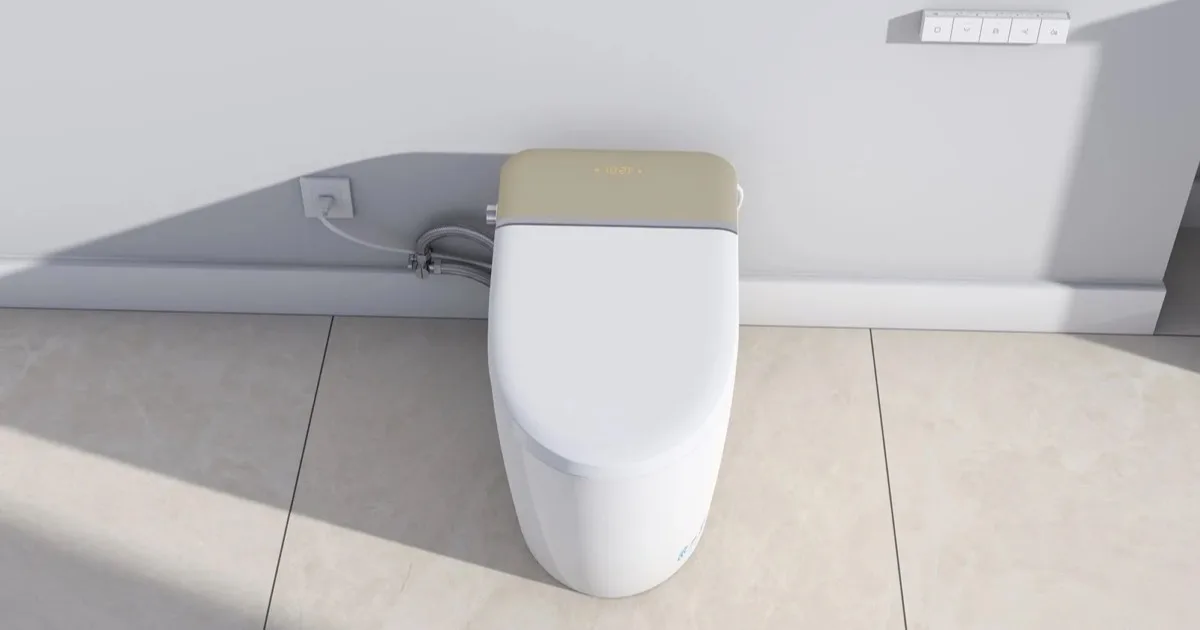
Smart toilets combine conventional plumbing with electronic bidet washing, heated seating, warm-air drying, automatic flushing and touchless controls. Those functions make daily use more convenient, but they also mean that a smart toilet troubleshooting call can involve several systems rather than one obvious mechanical fault.
A toilet that will not flush may have a water-supply problem, a control setting issue or a mechanical failure. A bidet nozzle that does not spray may be affected by a closed valve, a clogged inlet filter or a seat sensor that does not detect occupancy. A heated seat that stays cold may simply have heating switched off, or it may need professional service.
The key to smart toilet repair is to identify whether the symptom involves water supply, electricity, sensors, user settings or an internal component before attempting any corrective action. That sequence protects both the user and the fixture.
This guide covers nine common problems, the checks that ordinary users and facility teams can perform safely, the situations that require a qualified technician, and the maintenance habits that reduce avoidable failures. It applies to integrated smart toilets and electronic bidet seats used in homes, hotels, apartments and commercial projects.
If you are still comparing models or preparing a project specification, start with the Lavilys integrated smart toilet range and confirm the installation conditions before diagnosing a fault.
Smart Toilet Troubleshooting: Quick Reference Table
Start with the symptom, then narrow the system.
| Problem | Possible cause | First safe check |
|---|---|---|
| Toilet will not flush | Water supply, control setting or flushing mechanism | Check the water supply and the approved manual flush control |
| Bidet nozzle does not spray | Closed valve, clogged filter or seat sensor | Check the water valve and seated-position requirements |
| Heated seat does not warm | Heating disabled, power issue or temperature setting | Check the control settings and energy-saving mode |
| Water is not warm | Heating setting or heater issue | Check the selected water temperature |
| Remote control does not work | Battery, pairing or signal problem | Check the batteries and operating position |
| Automatic lid does not open | Disabled feature, blocked sensor or power problem | Check the settings and clean the accessible sensor area |
| Toilet flushes unexpectedly | Sensor activation or control issue | Check sensor cleanliness and the automatic-flush settings |
| Water leaks around the toilet | Loose connection, seal or internal fault | Stop use and identify the visible leak location |
| Toilet makes unusual noise | Normal operation, vibration or component fault | Identify when the sound occurs and which function is active |
These are general possibilities, not model-specific fault diagnoses. Always follow the approved user manual for the exact model. Manuals and installation documents for supported Lavilys models are available in the technical document library.
Before Troubleshooting: Follow These Safety Precautions
A smart toilet contains electrical components that operate near water. Electrical safety must come before convenience.
Before investigating a problem:
- Identify the exact product model and review its user manual.
- Keep hands, electrical plugs and power connections dry.
- Do not remove electrical covers or dismantle powered components.
- Do not bypass grounding, protective devices or occupancy sensors.
- Never use an extension cord as a substitute for a properly installed electrical outlet.
- Stop using the toilet if there is an electrical smell, visible cable damage, unusual heating or water near electrical equipment.
If an outlet or powered component is wet, do not touch it. Have a qualified person isolate the electrical supply safely.
If a GFCI outlet or circuit breaker repeatedly trips, stop resetting it and arrange an inspection by a qualified electrician or authorized service technician. A protective device that trips repeatedly is reporting a fault, not asking for another reset.
The checks in this guide are intended for ordinary users and facility maintenance teams. Internal electrical testing, plumbing repairs and component replacement should be handled by qualified personnel.
Problem 1: Smart Toilet Not Flushing
A toilet that will not flush is the most disruptive fault because it affects the fixture’s primary function. Before assuming that the electronic system has failed, determine whether the toilet has an adequate water supply.
Possible Causes
- The water supply valve is closed.
- The building has insufficient water pressure or flow.
- The flushing system has not completed its refill or operating cycle.
- An automatic flushing setting is disabled.
- A sensor has not detected the expected user movement.
- The electronic control system has lost power.
- A flushing valve, pump or other internal component requires servicing.
Step 1: Check the Water Supply
Confirm that water is available elsewhere in the bathroom. If the toilet has an accessible shutoff valve, verify that it is in the position specified by the installation manual.
Do not force a stuck valve or disconnect a pressurized supply hose. If the toilet has recently been installed, ask the installer to verify that the supply meets the model’s required pressure and flow conditions. The installation requirements checklist explains the pressure, rough-in and electrical inputs that should be confirmed before commissioning.
Step 2: Try an Approved Manual Control
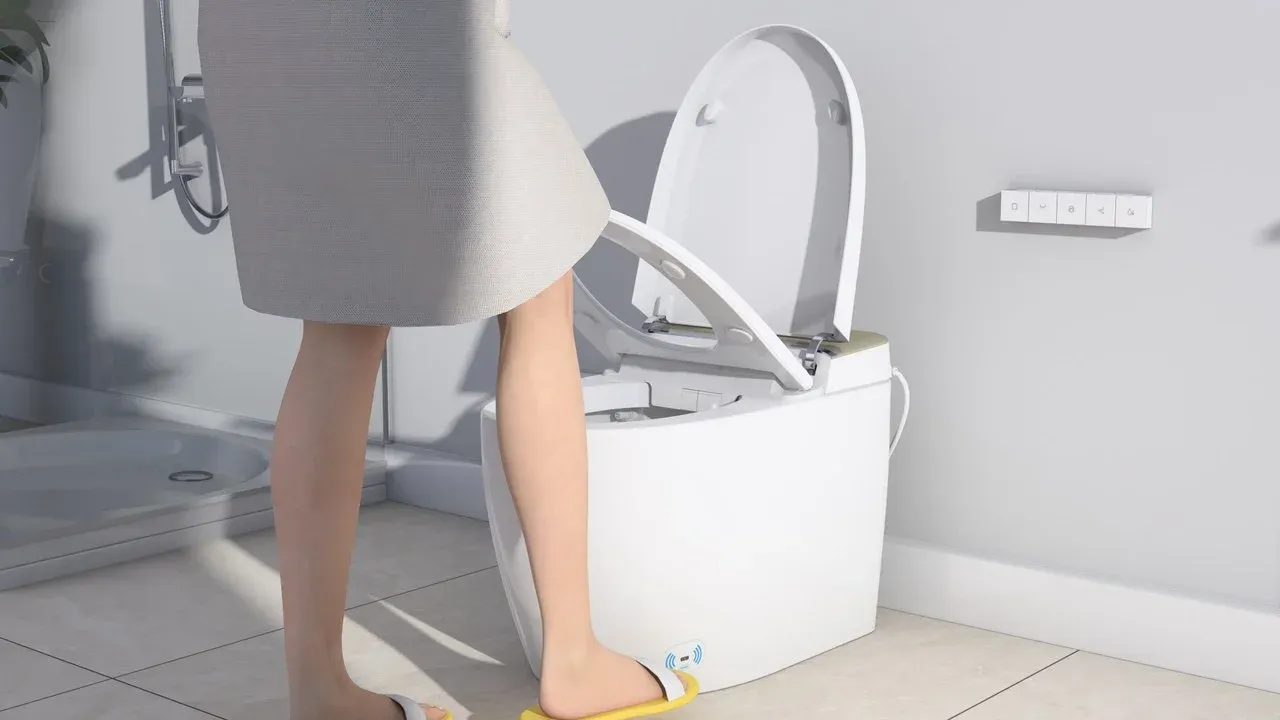
Some integrated smart toilets provide several flushing methods. Depending on the model, these may include automatic flushing, remote-control flushing, side-button flushing, foot-sensor flushing, or an emergency or backup flush.
If automatic flushing fails but an approved manual control still works, the problem may involve the sensor, the electronic settings or the control pathway rather than the entire flushing mechanism.
Do not assume that every smart toilet includes emergency flushing. Check the model documentation before relying on a backup method.
Step 3: Check Automatic Flushing Settings
For models with automatic flushing, confirm that the function is enabled. The exact procedure depends on the manufacturer.
Some models require the user to be detected for a minimum period before an automatic flush can occur. Others activate flushing only after the user leaves the sensing area. A setting that was changed for cleaning or maintenance may still be active.
When to Call a Technician
Contact an authorized service provider if the water supply is normal but the toilet will not flush using any approved control. A technician may need to inspect the flush mechanism, water inlet, sensor controls or internal electronic components.
Important: If the bowl is blocked or water is rising, stop attempting additional flushes. Follow the appropriate blockage procedure and contact a plumber when necessary.
Problem 2: Bidet Nozzle Not Spraying Water
A non-operating bidet nozzle is one of the most common smart toilet troubleshooting issues. The washing system usually depends on water supply, seat detection and a functioning control path.
Possible Causes
- The water supply is turned off.
- A water inlet filter is obstructed.
- The seat sensor does not detect an occupied seat.
- The washing pressure is set incorrectly.
- A temporary protective mode is active.
- The nozzle or an internal water-control component requires servicing.
Step 1: Verify the Seat Sensor
Many smart toilets prevent bidet washing unless a user is properly seated. This helps avoid unintended spraying.
If the toilet does not recognize occupancy, the wash function may not activate. Follow the seating and operation instructions in the model’s manual.
Do not bypass or disable the occupancy sensor to force the nozzle to spray. Doing so removes a deliberate safety function.
Step 2: Check the Water Supply
Confirm that the toilet has an adequate water supply. If other water-using functions are also affected, there may be a common supply problem rather than a nozzle fault.
Step 3: Check the Washing Settings
Verify that the selected washing mode is supported by the model and that the water-pressure setting is appropriate. Use only the approved control method.
Step 4: Inspect the Approved Filter Maintenance Procedure
Some smart toilets include accessible inlet filters. Sediment or scale may restrict water flow over time.
Only clean or replace a filter when the manufacturer provides a user-serviceable procedure. Shut off the water supply and disconnect electrical power as instructed before performing any approved maintenance.
When Professional Service Is Needed
If the washing system still fails after the recommended checks, the problem may involve a valve, pump, control board, heating assembly or another internal component. These parts should not be opened or repaired by untrained users.
Problem 3: Smart Toilet Seat Not Heating
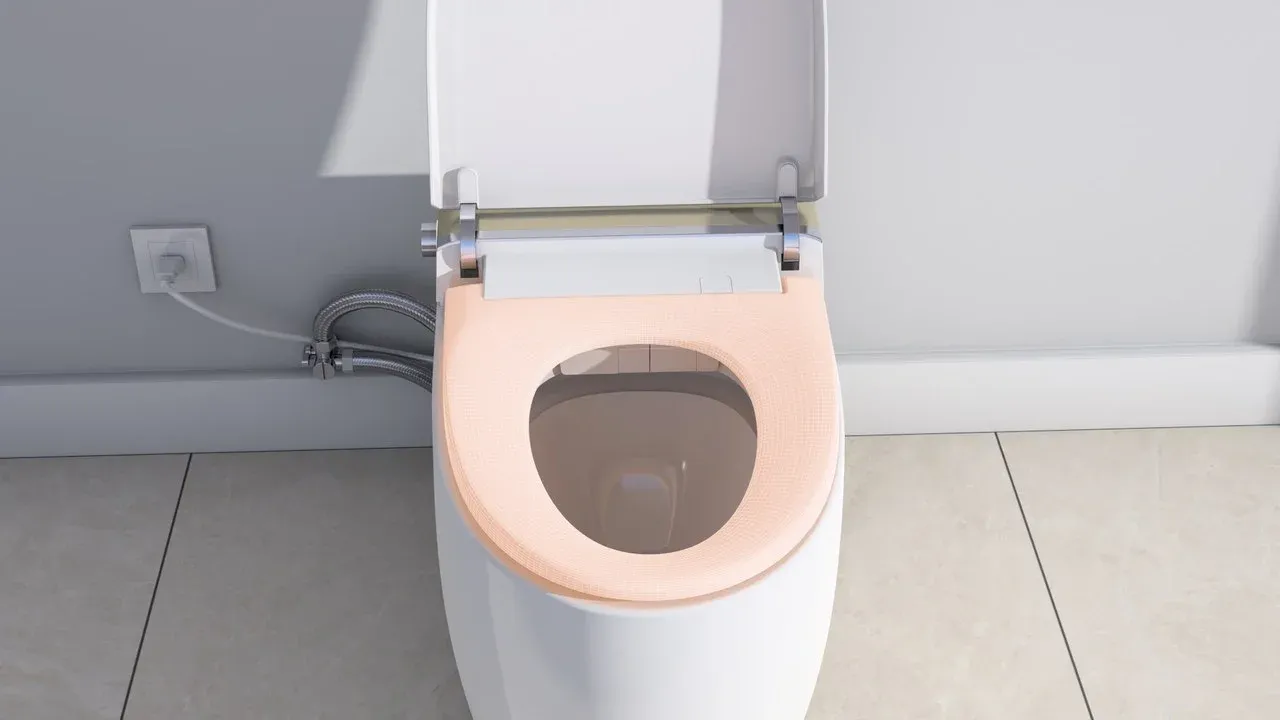
A heated seat is a popular smart toilet function, particularly in colder climates. If the seat remains cold, the cause may be as simple as a disabled setting.
Possible Causes
- Seat heating is switched off.
- The temperature is set to room temperature.
- Energy-saving mode is active.
- The toilet is not receiving electrical power.
- Temperature protection has activated.
- The seat heater or electronic control system requires service.
Step 1: Check the Temperature Setting
Use the remote or control panel to confirm that seat heating is enabled. On many models, users can select several temperature levels.
Do not assume that the highest level is always appropriate. A low setting may feel cold in a cool room even when the heater is working normally. The high-tech toilet feature guide explains how seat heating, water heating and drying settings differ across models.
Step 2: Check Energy-Saving Settings
Some smart toilets reduce heating during standby or use an automatic energy-saving program. This may change the seat’s temperature when the toilet is not occupied. Consult the product manual to understand normal behavior.
Step 3: Verify Normal Power Operation
If several electronic functions fail simultaneously, the issue may be related to the appliance’s electrical supply. Do not inspect internal wiring or bypass an electrical protective device.
When to Request Repair
If the seat remains cold despite confirmed settings and normal power, contact authorized technical support.
Unusual heat, a burning smell or visible damage requires immediate discontinuation of use.
Problem 4: Smart Toilet Water Not Heating
Most modern electronic bidet toilets provide warm-water washing. When the washing water is cold, it does not always mean the heater has failed.
Possible Causes
- Water heating is disabled.
- The selected temperature is too low.
- The heater has entered a protective state.
- The inlet water is colder than expected.
- The heating system or temperature sensor requires servicing.
Safe Checks
First, verify the selected water-temperature setting.
Next, review whether the model uses instant heating or stored warm water. Instant-heating performance depends on the model’s heating capacity, water flow and incoming water temperature. A small instant heater may deliver a lower temperature at high flow than at a gentle flow.
Do not attempt to modify the heater, thermostat or electrical wiring.
If water temperature is abnormally high or unstable, stop using the washing function and contact technical support. Scalding risk should be treated as an electrical and control fault, not a comfort preference.
Problem 5: Smart Toilet Remote Control Not Working
A smart toilet remote provides access to washing modes, temperature adjustments, flushing and other functions. When the remote stops responding, the cause may be external to the toilet itself.
Possible Causes
- Batteries are depleted or installed incorrectly.
- The remote is outside the effective operating range.
- The control signal is obstructed.
- The remote has lost pairing on a model that requires pairing.
- The remote or receiver is damaged.
Troubleshooting Steps
Check the batteries. Replace them with the type specified in the manual, following the correct polarity.
Check the operating position. Use the remote within the manufacturer’s recommended distance and orientation. A remote that works beside the toilet but not across the bathroom may simply be at the edge of its range.
Review pairing instructions. If the remote supports pairing, follow only the documented procedure for that model.
Try another approved control. If the toilet operates through its side knob but not the remote, this narrows the problem to the remote-control pathway.
The A18 integrated smart toilet provides a wall-mounted remote, side control and foot-sensor operation, which gives maintenance teams more than one way to identify where a control fault sits.
When to Replace the Remote
If the remote remains unresponsive after the documented checks, request technical support or a compatible replacement.
Do not assume that remotes are interchangeable across different smart toilet models. Frequency, pairing logic and button mapping can differ even within one product family.
Problem 6: Automatic Lid Not Opening or Closing
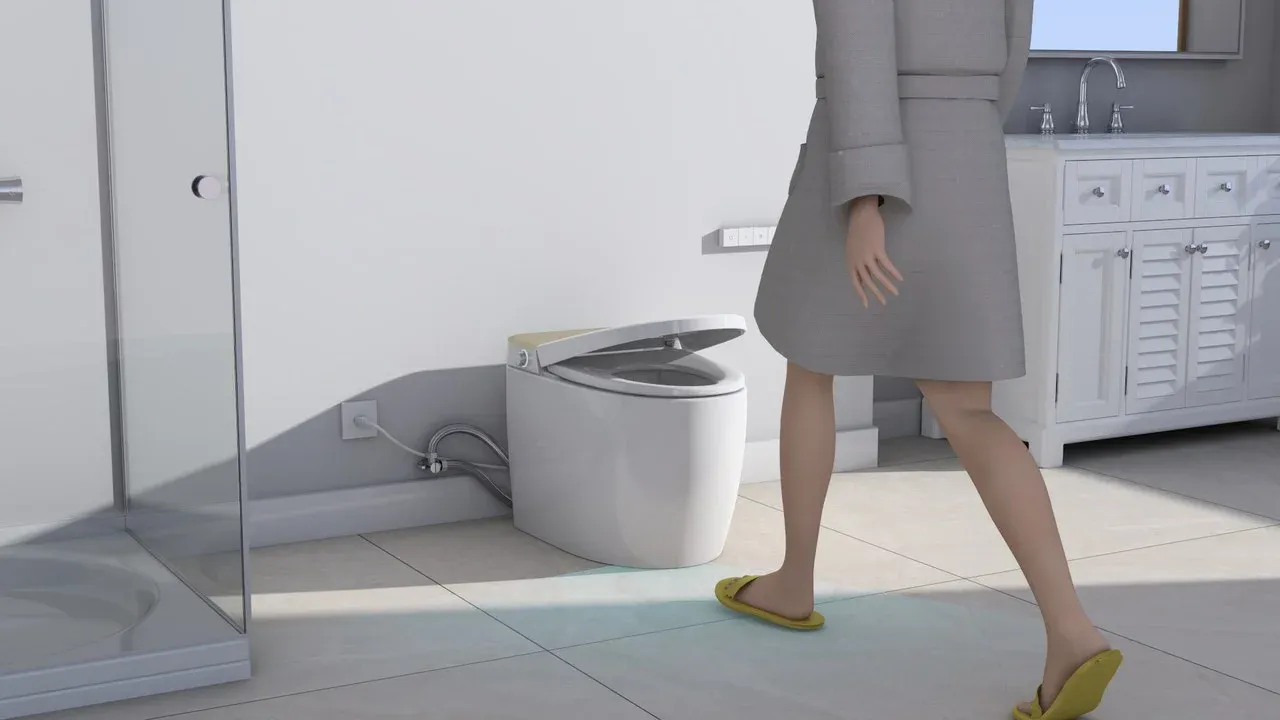
Automatic lid operation is available on selected premium integrated smart toilets. These systems use sensing and motorized components to open or close the lid.
For example, the Lavilys A18 Integrated Smart Toilet includes microwave-sensing automatic lid operation, remote control and foot-sensor controls. The lid sensor and the flushing controls are separate technical functions, a distinction that matters when diagnosing either one.
Possible Causes
- Automatic lid mode is disabled.
- The sensing area is obstructed.
- The sensor area is dirty or wet.
- The required closing delay has not elapsed.
- An object physically obstructs lid movement.
- The motor or control system requires service.
What You Can Check
Confirm that automatic operation is enabled. Gently clean the accessible exterior sensor area according to the user manual. Remove objects that interfere with the lid’s normal movement.
Check whether the expected delay has elapsed before assuming that the closing function has failed. Some lids wait for a defined period after the user leaves before closing.
What You Should Avoid
Do not force an electrically operated lid against resistance or attempt to dismantle the motor mechanism.
If the lid moves irregularly, makes grinding noises or repeatedly stops, request professional service. A lid that reverses on contact may be responding to an obstruction, but repeated reversal without an obstacle points to a sensor or motor fault.
For the sensor logic behind automatic flushing, read how automatic flush toilets work.
Problem 7: Smart Toilet Flushing by Itself
Unexpected flushing can be inconvenient and may increase water consumption. However, the cause is not always a defective flushing component.
Possible Explanations
- A sensor detects movement incorrectly.
- Automatic flushing settings are inappropriate for the installation.
- The sensor surface is dirty or obstructed.
- The control system is malfunctioning.
- The model includes a documented maintenance-flush feature.
Different products use different sensing technologies and operating logic. Some systems react to seat occupancy, while others use infrared or proximity sensing.
What to Check
Review the automatic flushing settings in the product manual. Inspect accessible sensor surfaces for moisture or contamination. Observe when the unwanted flush occurs and whether it follows nearby movement.
If the problem persists, record the circumstances and request technical support. Do not modify internal electronics or sensor wiring.
A toilet that flushes at random may also be responding to a legitimate trigger, such as a cleaning mode or a sensor range that reaches into a doorway. The automatic flush guide explains why sensor range, delay and control logic must be matched to the room.
Unnecessary flushing wastes water. The U.S. Environmental Protection Agency’s WaterSense residential toilet program explains how flush volume and performance are rated; a sensor fault does not change the fixture’s rated efficiency, but repeated false flushes can erase the intended savings.
Problem 8: Water Leaking Around a Smart Toilet
Any unexplained water leak should be investigated promptly. Water leakage can damage flooring, cabinets and nearby electrical equipment.
Possible Leak Locations
A leak may come from:
- The water inlet connection
- A supply hose or valve
- A tank or internal water circuit
- The toilet-to-floor seal
- A drainage connection
- Internal plumbing components
Immediate Safety Steps
If a leak is visible, stop using the toilet. Where it is safe to do so, close the accessible water shutoff valve.
Keep away from wet electrical components. If necessary, have electrical power isolated safely.
Do not continue operating the washing, heating or flushing functions until the cause is identified.
Identify the Visible Location
Observe whether the water appears near the supply connection, underneath the ceramic body or around the floor. Do not disassemble the unit to investigate.
A leaking supply fitting may require a different repair from a failed toilet seal or internal water system. Photograph the location before cleaning it up, because the evidence helps the service provider identify the likely joint or component.
When to Call a Professional
Request a plumber or authorized service technician for leaks involving internal components, concealed plumbing, toilet seals or electrical areas.
If the fixture must be removed, the work should follow the manufacturer’s installation and service procedures.
Problem 9: Smart Toilet Making Unusual Noises
Smart toilets contain motors, fans, valves and other components. Some operating sounds are normal.
Examples may include:
- A short motor sound during lid movement
- Water movement during washing
- A fan operating during drying
- A valve activating during flushing
- A brief self-rinsing cycle
However, new or unusually loud noises should not be ignored.
Possible Warning Signs
- Repeated clicking without a successful function
- Grinding during lid movement
- Continuous pump or motor operation
- Strong vibration
- Unusual buzzing
- Noise accompanied by water leakage or overheating
Safe Troubleshooting
Record when the noise occurs and which function is active. Check for obvious external obstructions.
Do not open the electronic housing or attempt to lubricate internal mechanisms unless the manual explicitly provides a user-maintenance procedure.
If the noise persists, discontinue the affected function and contact service support.
How to Reset a Smart Toilet Safely
Some smart toilet problems may involve temporary control-system errors. However, reset procedures differ by model.
If the manufacturer documents a normal restart or reset procedure, follow it exactly. A typical approved procedure may involve switching the unit off and restarting it after the specified interval, but this should not be treated as a universal instruction.
Do not repeatedly reset a unit that trips electrical protection.
Do not attempt a reset while there is a leak, an electrical burning smell, a damaged power cord or water around electrical components.
If the product displays an error code, record the exact code and consult the model-specific manual. Avoid using generic internet error-code lists, because the same code may have different meanings across manufacturers.
Smart Toilet Maintenance Checklist
Regular maintenance can help identify wear, contamination and performance changes before they become more serious. The schedule below is a general planning guide, not an official service interval for every model.
| Maintenance item | Suggested check | Notes |
|---|---|---|
| Exterior ceramic and seat | Routine cleaning | Use compatible non-abrasive products |
| Nozzle cleanliness | Regular inspection | Follow the approved nozzle-cleaning mode |
| Remote control | As needed | Check batteries and response |
| Sensor surfaces | When dirty or performance changes | Use the manufacturer-approved cleaning method |
| Water inlet and visible hoses | Periodic visual inspection | Look for damage or moisture |
| Water filter | According to manual or local water conditions | Clean or replace only if user-serviceable |
| Flushing performance | Monitor during normal use | Investigate weak or inconsistent flushes |
| Electrical cord and outlet | Periodic visual inspection | Do not handle wet or damaged components |
| Error records | Whenever faults occur | Record codes and affected functions |
| Internal servicing | According to manufacturer guidance | Authorized personnel only |
Cleaning Recommendations
Use the cleaning materials recommended in the product manual. Avoid aggressive chemicals, abrasive tools or spraying water directly into electronic control openings.
Never combine cleaning chemicals. If the product includes a nozzle-cleaning function, operate it according to the manufacturer’s instructions. A self-cleaning nozzle still requires appropriate maintenance.
Smart Toilet Maintenance for Hotels and Apartment Buildings
Maintenance becomes more important when dozens or hundreds of smart toilets are installed across a property. Hotel operators, property managers and service contractors should implement a consistent procedure.
Standardize Product Models
Using a limited number of approved models can make spare-parts management and technician training easier. A mixed fleet may look flexible at procurement, but it multiplies the manuals, filters, remotes and control logic that the maintenance team must carry.
Maintain Model Records
Record the exact model number, installation location, commissioning date and approved configuration for every unit. When a fault occurs, the record tells the technician which pressure class, voltage and control set apply.
Track Recurring Problems
Identify whether a fault affects one fixture or multiple units. If several toilets in the same building experience weak flushing or water-temperature problems, the issue may involve shared infrastructure rather than an isolated product.
Prepare Spare-Parts Support
Before a large installation, confirm how compatible replacement parts can be ordered and what documentation is required for warranty service.
Establish a Service Escalation Process
Routine cleaning staff should not be expected to perform electrical repairs. Define which problems can be handled by housekeeping, facilities maintenance, qualified plumbers, electricians and manufacturer-authorized service providers.
For hospitality planning, read specifying hotel smart toilets and planning maintenance and review the hotel project support programme.
In accessible guestrooms, the location and reach range of controls should also be checked against the ADA Standards for Accessible Design. A remote that works on a showroom wall may still be out of reach for a guest using a wheelchair.
How to Reduce Smart Toilet Repair Problems Before Installation
Many maintenance problems can be reduced through appropriate product selection and site preparation.
Confirm Voltage and Electrical Protection
The electrical supply must match the exact product configuration. For example, the Lavilys W1 Integrated Smart Toilet is documented with a 110V AC ±10%, 50/60 Hz configuration and requires a properly grounded electrical connection. Its user documentation also advises against extension cords.
The North American voltage guide explains the circuit and grounding checks that should happen before the fixture is installed.
Verify Water Pressure
Smart toilet flushing and washing systems have model-specific water-pressure requirements. Some Lavilys configurations with built-in tanks have lower stated minimum supply-pressure requirements than corresponding direct-supply configurations.
Check the actual plumbing conditions before approving a model. The tankless and concealed-tank comparison explains why two fixtures that look alike from the outside may need different supply conditions.
Confirm Drain and Rough-In Compatibility
A toilet that does not match the installation rough-in may require costly corrections. Use approved dimensional drawings and site measurements before installation.
Test Sample Units
For large residential and hospitality developments, a pilot installation can help evaluate real flushing behavior, sensor operation, washing comfort and service access.
See the Lavilys smart toilet installation requirements checklist for a more detailed technical review, or review construction project support for multi-unit coordination.
Frequently Asked Questions About Smart Toilet Repair
Why is my smart toilet not flushing?
Possible causes include a closed water valve, insufficient water pressure, a disabled automatic function, an electronic control issue or a mechanical fault. Check the approved water-supply and manual-control procedures first. If the toilet still will not flush, contact qualified service support.
Why is my smart toilet bidet not spraying water?
The washing system may be affected by the water supply, seat sensor, filter or control settings. Confirm correct operation according to the model’s manual. Do not bypass the seat sensor or dismantle internal water components.
Why is my smart toilet seat not heating?
Seat heating may be disabled, set to room temperature or affected by energy-saving mode. A power or heating-system fault is another possibility. Check user settings first and request service if the problem continues.
How do I reset a smart toilet?
Follow the exact reset instructions in the product manual. Reset methods differ by manufacturer. Never repeatedly reset a tripped breaker or operate a toilet that has wet or damaged electrical components.
Can I repair a smart toilet myself?
Users can usually perform basic documented checks, adjust settings, replace remote batteries and carry out approved cleaning. Electrical repairs, internal component replacement and complex plumbing work should be performed by qualified personnel.
Why does my smart toilet flush automatically?
Automatic flushing may be part of normal operation. If flushing occurs unexpectedly, check the sensor area, operating settings and model-specific maintenance features. Persistent unexplained flushing should be reviewed by a technician.
How often should a smart toilet be serviced?
There is no universal interval. Follow the manufacturer’s maintenance schedule, considering usage frequency, local water quality and whether the toilet is installed in a home or commercial property.
Are smart toilets expensive to repair?
Repair costs depend on the fault, product design, warranty coverage, service access and spare-parts availability. Replacing a remote battery is different from repairing a control board or flushing mechanism. Buyers should consider service support when selecting a product.
Conclusion: Identify the Cause Before Attempting Smart Toilet Repair
A smart toilet combines electronic comfort functions with a conventional waste-removal system. When a problem occurs, the first task is to identify whether it involves power, water supply, user settings, sensors or mechanical components.
Many minor issues can be resolved through approved maintenance or control adjustments. However, water leaks, electrical problems, repeated protective-device trips, unusual overheating and internal component failures require professional attention.
For homeowners, following the correct manual and maintaining the fixture can help reduce unnecessary service calls. For hotels, distributors and property developers, standardized configurations, accurate installation records and dependable spare-parts support are essential for long-term operation.
The most effective smart toilet troubleshooting approach combines safe initial checks with model-specific documentation and qualified technical support.
Smart Toilet Products and Technical Support from Lavilys
Lavilys provides integrated smart toilets and electronic bidet seats for bathroom distributors, retailers, residential developments and hospitality projects. Product pages include model specifications and available technical documentation to support evaluation and service planning.
For a model-matched service review, send the model number, fault description, error code, installation location and any safe photos or video to the Lavilys after-sales team. The technical FAQ covers common fitment and compliance questions, and the contact form routes project and spare-parts requests to the right team.
Explore Lavilys smart toilets or review the product documentation library before ordering replacement parts.
Lavilys — Smart Living Begins in the Bathroom.
Related pages
Referenced models
Products discussed in this article
A18 Integrated Smart Toilet
A17 sibling with microwave-sensing auto lid and foot-sensor operation — adds hands-free open/close for hospitality and premium residential use.
View specifications Smart ToiletW1 Integrated Smart Toilet
A compact 110V integrated model with direct side control, temperature feedback and a documented comfort function set.
View specificationsNext step
Send us the project details
Share the market, quantity, site conditions and documentation you need. Our technical team confirms configuration and compliance scope before anything is quoted.