
Buyer Guide / 22 min read
Tankless Toilet Pros and Cons: Pressure and Cost
Compare tankless toilet pros and cons: space, cleaning, water pressure, power and installation costs. Check direct-supply and concealed-tank options before buying.
Key takeaways
- Tankless is not one design — true direct-supply, concealed-tank and tankless-looking smart toilets have different flushing and pressure requirements.
- Direct-supply configurations usually need more pressure; Lavilys documents 0.15 MPa without a tank versus 0.06 MPa for tank-equipped options.
- A streamlined exterior does not guarantee water savings — compare the tested flush volume and WaterSense scope for the exact model.
- Rough-in, static and dynamic pressure, electrical supply and service access all need confirmation before a project order.
B2B sourcing checklist
Move from research to a model-specific quotation
Use the resources below to confirm specifications, compliance scope, order terms and delivery timing before requesting a quote.
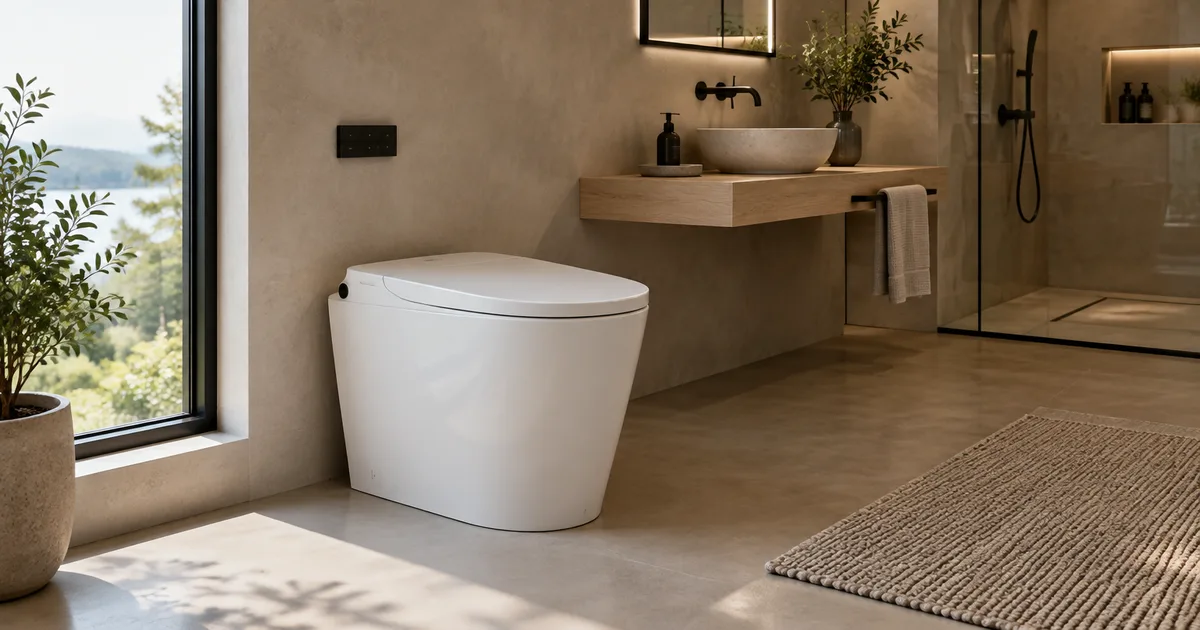
The main advantages of a tankless toilet are a streamlined exterior, fewer exposed tank surfaces to clean and potential space savings. The main disadvantages are model-specific pressure and flow requirements, possible plumbing or electrical upgrades, and more specialized servicing on electronic models. Tankless design alone does not guarantee stronger flushing or lower water use.
Choose a direct-supply model only after checking the water supply under demand. If supply conditions do not match, compare a documented tank-equipped configuration or a conventional tank toilet. A concealed reservoir can give a tankless appearance while still storing flushing water.
Tankless Toilet Pros and Cons at a Glance
| Advantage | Limitation to check before buying |
|---|---|
| Streamlined appearance | A hidden tank may still be present; confirm the flushing architecture |
| Potential space savings | Compare installed depth and service clearance, not appearance alone |
| Fewer exposed tank surfaces to clean | Bowl, nozzle and internal components still need maintenance |
| Smart functions on electronic models | Power, replacement parts and outage operation vary by model |
| Water-efficient models are available | Verify tested flush volume; tankless does not itself mean water-saving |
| Direct-supply flushing where specified | Check minimum pressure and flow during use, plus any plumbing upgrades |
For project selection, compare the integrated smart toilet models and use the installation and cost checklist before requesting a quotation.
What Is a Tankless Toilet?
A tankless toilet is generally understood as a toilet that does not use a conventional, externally visible water tank mounted behind the bowl.
Instead of the familiar two-piece arrangement, the toilet may have a compact, integrated body or rely on a different flushing system.
However, the term tankless toilet is often used loosely in product marketing.
A toilet that appears to have no tank does not necessarily operate without a water reservoir.
There are three important designs to distinguish.
1. True Tankless Toilets
A true tankless toilet does not use a conventional flushing water-storage tank.
Instead, it relies on incoming water flow and a flushing mechanism designed to deliver sufficient water during a flush.
For example, a commercial flushometer toilet uses a specialized flushing valve connected to the building’s water supply.
A residential direct-supply design may use a different internal flushing arrangement, so its operating requirements must be checked individually.
Because these systems depend on the available water supply, adequate pressure and flow are essential.
2. Concealed-Tank Toilets
A concealed-tank toilet contains a water reservoir that is hidden behind a wall, inside furniture, or within the toilet’s integrated body.
From the outside, it may resemble a tankless toilet.
However, the water-storage system still exists.
This can allow the product to maintain a cleaner appearance while using stored water for flushing.
Some concealed-tank configurations are designed to operate under lower incoming water-pressure conditions than comparable direct-supply models.
3. Tankless-Looking Smart Toilets
Many modern integrated smart toilets have streamlined ceramic bodies without a traditional exposed cistern.
They may include bidet washing, heated seats, automatic flushing, warm-air drying, and sensor-operated lids.
Some use direct-supply flushing, while others contain internal water reservoirs or assisted-flushing components.
The important distinction is that a tankless appearance does not prove that a product has no internal water tank.
Before purchasing, buyers should verify the actual flushing architecture and water-pressure requirements of the selected model. If the category is new to you, start with what a smart toilet is and how it works.
How Does a Tankless Toilet Work?
The flushing process depends on whether the toilet uses direct water supply, a concealed reservoir, or another assisted-flushing system.
Direct-Supply Flushing
In a direct-supply system, water enters through the building’s plumbing network.
When the flush is activated, a flushing mechanism releases water into the bowl at the required flow rate and pressure.
The water moves waste through the toilet trapway and into the building’s drainage system.
Because there is no conventional storage tank to provide the flushing water, incoming supply conditions become especially important.
A system designed for direct-supply flushing requires sufficient water pressure and flow during operation—not merely an acceptable pressure reading when no other fixtures are running.
Built-In Tank Flushing
A concealed or built-in tank stores water within a hidden reservoir.
When the user activates a flush, the toilet releases stored water through its flushing system.
Depending on the model, gravity, pump assistance, or another engineered mechanism may help deliver the required flushing performance.
This arrangement can make certain products more suitable for buildings where the supply cannot consistently meet the requirements of a direct-supply design.
However, a built-in tank does not guarantee compatibility with every low-pressure installation.
Electronic Smart Toilet Flushing
An integrated smart toilet may add electronic controls to either of these plumbing arrangements.
Depending on the configuration, flushing can be activated by:
- A remote control
- A side-mounted button or knob
- An automatic seat sensor
- A foot-operated sensor
- A manual or emergency control
Electronic convenience functions do not determine how the flushing water is supplied.
A toilet can have automatic flushing and still use a built-in tank. The automatic flush guide explains how the sensor, control module and flushing valve divide the work.
Likewise, a true tankless toilet does not necessarily include smart electronic features.
Advantages of Tankless Toilets
1. Modern and Minimalist Bathroom Design
One of the most noticeable advantages of a tankless toilet is its streamlined appearance.
Traditional toilets often have a visible tank behind the bowl, creating a recognizable two-piece or one-piece profile.
Tankless and concealed-tank designs can eliminate this visual bulk.
The result can be a more integrated appearance that complements contemporary bathroom interiors.
This is particularly appealing in:
- Luxury residential bathrooms
- Modern apartment developments
- Boutique hotels
- High-end renovation projects
- Minimalist bathroom showrooms
For architects and interior designers, a reduced-profile fixture can provide additional flexibility when coordinating bathroom finishes and other fittings.
2. Potential Space Savings
Some tankless designs occupy less depth than traditional toilets because they do not require a large external tank.
This can be useful in compact bathrooms where every inch matters.
However, not all tankless toilets are smaller.
A wall-hung toilet may require a concealed installation frame and in-wall equipment, while an integrated smart toilet can contain electronic components that affect its overall dimensions.
Therefore, buyers should compare the complete installed dimensions rather than relying on the term tankless.
Important measurements include overall depth, width, height, front clearance, and the space required for maintenance access.
3. Easier Exterior Cleaning
A streamlined toilet may have fewer exposed joints and surfaces around an external tank.
Smooth ceramic sides can be easier to wipe down than designs with multiple narrow gaps.
For hotels, apartment developments, and shared facilities, simplified exterior cleaning may be a practical benefit.
However, the toilet bowl, seat, washing nozzle, and flushing components still require routine cleaning and maintenance.
A tankless design is not automatically self-cleaning.
4. Flexible Smart Toilet Features
Modern tankless-style toilets can integrate electronic comfort functions into a compact ceramic body.
Depending on the model, available functions include:
- Heated toilet seat
- Adjustable rear and front washing
- Instant water heating
- Warm-air drying
- Automatic flushing
- Foot-sensor operation
- Automatic lid opening
- Nozzle self-cleaning
- Night lighting
- Remote control
These features can improve user convenience and provide a more premium bathroom experience.
For example, selected Lavilys integrated smart toilets combine bidet washing, heated seating, and automatic operation in a streamlined design.
The exact feature set depends on the product and configuration. To compare these functions by buyer priority instead of by supply configuration, read high-tech toilet features: which functions matter most.
5. Water-Efficient Models Are Available
Certain tankless toilets and integrated smart toilets are designed to use relatively low flush volumes.
However, tankless does not automatically mean water-saving.
The actual consumption depends on the flushing mechanism and the manufacturer’s tested water volume.
For context, the U.S. Environmental Protection Agency states that WaterSense-labeled tank-type toilets and flushometer-valve toilets meet water-efficiency and performance requirements.
Qualifying WaterSense-labeled toilets use no more than 1.28 gallons per flush under the applicable product specification.
For a product to carry that label, it must meet the relevant certification requirements. A manufacturer’s claimed flush volume alone does not establish WaterSense certification.
Learn more through the EPA WaterSense Residential Toilet Program and Commercial Toilet Program.
6. Suitable for Premium Residential and Hospitality Applications
In luxury apartments and hotels, the bathroom experience forms part of the overall property specification.
A well-selected integrated smart toilet may contribute to a more modern appearance and consistent guest experience.
For professional buyers, however, design should be balanced with ease of operation, maintenance requirements, replacement-part availability, and installation compatibility.
Premium features are valuable only when the product can perform reliably in its intended environment.
Disadvantages of Tankless Toilets
1. Water Pressure Can Be a Major Limitation
Water pressure is one of the most important factors when selecting a direct-supply tankless toilet.
Without sufficient pressure and flow, the flushing system may not operate as designed.
Potential symptoms include incomplete waste removal, weak bowl rinsing, or repeated flushing attempts.
The required pressure varies by manufacturer and model.
For example, selected Lavilys direct-supply smart toilet configurations specify a minimum static supply pressure of approximately 0.15 MPa.
Other configurations with a built-in water tank are documented with a lower minimum static pressure of 0.06 MPa.
These figures should not be treated as universal tankless toilet standards.
A building with inadequate supply pressure may need a tank-equipped model or a professionally designed plumbing solution.
2. Installation May Be More Complex
Replacing an existing conventional toilet with an integrated tankless-style toilet is not always a direct substitution.
Installers may need to verify the position of the floor drain, available water pressure, pipe sizing, electrical access, and overall installation dimensions.
Some wall-hung systems also require structural support frames and concealed plumbing components.
An incorrect rough-in measurement can make a selected toilet incompatible with the bathroom.
Professional buyers should therefore complete an installation assessment before purchasing multiple units.
3. Higher Initial Investment
Tankless toilets vary widely in cost.
A basic mechanical tankless toilet and a premium electronic smart toilet are different product categories and should not be treated as equivalent.
Integrated electronic models may cost more because they include water-heating equipment, sensors, circuit boards, control interfaces, and additional comfort functions.
Project buyers should also consider installation work, replacement parts, maintenance, and electrical requirements.
The most economical product is not necessarily the one with the lowest initial purchase price. Compare the total cost of ownership of a smart toilet against a conventional toilet before fixing a project budget.
4. More Specialized Maintenance on Smart Models
A simple mechanical toilet and an advanced electronic toilet have different maintenance needs.
Smart models may include sensors, heating components, electronic controls, bidet nozzles, filtration components, and automatic lid mechanisms.
These components require appropriate servicing.
For hotels and large residential projects, spare-parts planning and consistent maintenance procedures can be particularly important. Review after-sales and replacement-part support during specification, not after the first fault.
5. Performance During a Power Outage Varies
A tankless toilet is not automatically dependent on electricity.
A mechanically operated commercial flushometer may function without electrical power.
However, an electronically controlled smart toilet may require power for automatic flushing, heating, washing, or other functions.
Some products provide manual or backup flushing options.
Before purchasing, verify which functions remain available during an outage and whether any backup battery system is included.
6. Not Every Model Is Suitable for Every Building
Tankless-style toilets can be attractive, but installation constraints should take priority over appearance.
Older plumbing systems, insufficient water flow, nonstandard rough-in dimensions, and limited electrical access may complicate installation.
This becomes especially important in multi-family developments, where plumbing conditions can vary between floors or building sections. Construction project support can help coordinate plumbing zones, unit types and phased deliveries before a mixed specification is approved.
Tankless Toilet vs Traditional Tank Toilet
A traditional tank toilet stores a quantity of water for flushing.
A direct-supply tankless toilet draws its flushing water from the building’s supply system without relying on a conventional storage tank.
A concealed-tank model still stores water, but hides that storage from view.
The following comparison focuses on a direct-supply tankless design versus a conventional tank toilet.
| Feature | Direct-Supply Tankless Toilet | Traditional Tank Toilet |
|---|---|---|
| Visible water tank | Usually absent | Usually present |
| Flushing water source | Direct plumbing supply | Stored water |
| Supply-pressure sensitivity | Can be higher | Tank refilling depends on supply; flushing uses stored water |
| Appearance | Often streamlined | Conventional profile |
| Installation | May require specific supply and valve conditions | Often compatible with existing residential layouts |
| Water efficiency | Depends on tested model | Depends on tested model |
| Electronic features | Optional, depending on model | Usually limited unless equipped with smart functions |
| Maintenance | Depends on flushing and electronic systems | Primarily conventional mechanical components |
| Power requirement | Depends on design | Standard mechanical models usually need none |
Neither design is universally better.
A traditional tank toilet may be the practical choice for a simple replacement.
A direct-supply tankless toilet may be suitable when the required plumbing conditions are available and the project prioritizes its specific design.
A concealed-tank smart toilet can offer another option for buyers who want a streamlined appearance with a stored-water flushing arrangement.
Do Tankless Toilets Need High Water Pressure?
Not all tankless toilets have the same pressure requirements.
Water-pressure compatibility depends on the flushing system, inlet design, pipework, and specific model.
Two pressure measurements are particularly useful.
Static Water Pressure
Static pressure is measured when water is not actively flowing through the relevant supply.
It provides an initial indication of the available pressure in the plumbing system.
However, static pressure alone does not demonstrate the supply’s performance during flushing.
Dynamic Water Pressure
Dynamic pressure is measured while water is flowing.
It can reveal pressure losses caused by pipe restrictions, undersized supply lines, long plumbing runs, or simultaneous use of other fixtures.
A building may have acceptable static pressure but experience a significant drop during demand.
For a direct-supply flushing system, that difference can be important.
Lavilys Water Pressure Examples
The following examples are based on currently published Lavilys product information.
| Product Configuration | Documented Supply Pressure | Installation Consideration |
|---|---|---|
| A18 integrated smart toilet | 0.15–0.75 MPa static (about 22–109 psi) | Verify available pressure and flow before selection |
| W1 with water tank | 0.06–0.75 MPa (about 9–109 psi) | Lower-pressure configuration |
| W1 without water tank | 0.15–0.75 MPa static (about 22–109 psi) | Direct-supply configuration |
| 6293 with water tank | 0.06–0.75 MPa static (about 9–109 psi) | Tank-equipped option |
| 6293 without water tank | 0.15–0.75 MPa static (about 22–109 psi) | Verify supply requirements |
These figures are model-specific examples, not universal installation thresholds. Final configuration and operating requirements must be confirmed against the approved technical documentation.
The difference matters because a tankless appearance does not establish the actual supply-pressure requirement.
What If a Building Has Low Water Pressure?
For buildings with low or inconsistent pressure, a compatible tank-equipped model may be preferable.
This is especially relevant for upper floors of older buildings, properties with long supply runs, and sites with pressure fluctuations.
A built-in reservoir can provide a flushing-water supply that is less directly dependent on instantaneous inlet flow.
However, buyers should not assume every tank-equipped model will work with every water supply.
Before placing an order, ask the installer to measure pressure and assess flow under realistic operating conditions.
For additional technical guidance, see the Lavilys Smart Toilet Installation Requirements Checklist.
Are Tankless Toilets Better at Flushing?
A tankless toilet is not automatically more powerful than a tank toilet.
Flushing performance depends on the complete system, including:
- Available water flow
- Water pressure
- Flushing valve or pump design
- Toilet bowl geometry
- Trapway design
- Flush volume
- Drainline conditions
A well-designed tank toilet can provide excellent flushing performance.
Likewise, a properly installed direct-supply toilet may achieve effective waste removal.
For professional buyers, claims such as “powerful flushing” should be supported by technical specifications and relevant performance testing.
Where applicable, ask for documented flush volume and available performance-test results.
For large projects, evaluating a sample unit under the intended plumbing conditions can help identify potential problems before bulk installation.
Do Tankless Toilets Save Water?
Water consumption should be evaluated through the rated and tested gallons per flush, not the toilet’s exterior design.
For example, replacing an older toilet rated at 1.6 gallons per flush with a model using 1.28 gallons per flush represents a nominal reduction of 0.32 gallons per flush.
That is a 20% reduction in flushing water consumption under the same number of flushes.
Actual savings depend on usage patterns, flush settings, maintenance conditions, and whether additional flushing is needed.
For tankless smart toilets with bidet functions, water used during personal washing should also be considered when evaluating overall water consumption.
Automatic flushing should not be confused with improved water efficiency.
A sensor-operated toilet may provide convenient hands-free operation, but its actual water consumption still depends on how much water is delivered during each flush and whether unintended repeat flushing occurs.
For hotels and apartment developments, the most useful comparison is between documented product performance under equivalent usage conditions.
Tankless Toilet Installation Requirements
Before purchasing a tankless toilet, review the following installation conditions.
1. Check the Rough-In Measurement
The toilet rough-in is the distance from the finished wall to the center of the floor drain.
A nominal 12-inch rough-in is common in North American residential bathrooms, but other measurements also exist.
Lavilys offers different rough-in configurations across its smart toilet range.
For example, the A18 is documented with a 305 mm rough-in, while the W1 offers 300 mm and 400 mm options.
The correct configuration must be selected before ordering.
Read the 300 mm vs 400 mm Smart Toilet Rough-In Guide for more information.
2. Verify Water Pressure and Flow
Ask a qualified installer to confirm:
- Static water pressure
- Pressure during water flow
- Supply pipe size
- Inlet connection compatibility
- Pressure variation during peak demand
- Manufacturer-required operating conditions
Where pressure is insufficient, choose an appropriate model rather than assuming the toilet will operate normally.
3. Confirm Electrical Requirements
A mechanical tankless toilet may not need electricity.
An electronic smart toilet generally requires electrical power for washing, drying, seat heating, sensors, and automatic controls.
For North American installations, verify that the selected model is configured for the available electrical supply.
Electrical protection, grounding, outlet placement, and circuit requirements must comply with applicable local codes.
The Lavilys Smart Toilet Voltage Requirements Guide covers these considerations in greater detail.
4. Check Bathroom Clearance
A compact appearance does not guarantee that a toilet fits a small bathroom.
Measure the overall installed depth and width, and check clearances to walls, cabinets, doors, and nearby fixtures.
Wall-hung models may require additional structural and concealed installation space.
5. Verify Maintenance Access
Before installation, consider how the fixture will be serviced.
For integrated smart toilets, maintenance may involve removing panels or accessing electronic components.
A beautiful installation that prevents service access can create avoidable costs later.
Hotels and apartment projects should consider access requirements during the design stage. Hospitality buyers can review hotel smart bathroom specification and maintenance support alongside the model data.
Which Is Better for Smart Toilets: Tankless or Built-In Tank?
There is no universal answer.
The right choice depends on the building’s infrastructure, the intended users, and the buyer’s maintenance expectations.
Choose a Direct-Supply Configuration When:
- The site meets the model’s required water-pressure and flow conditions.
- The plumbing system is compatible with the manufacturer’s installation requirements.
- The model provides the desired flushing and comfort functions.
- The project can support the selected system’s maintenance needs.
Consider a Built-In Tank Configuration When:
- The building has lower or less consistent incoming water pressure.
- A compatible tank-equipped model is available.
- The project requires a streamlined design without a conventional exposed tank.
- The specified flushing arrangement is more suitable for the plumbing conditions.
The presence of a built-in tank should not automatically be treated as a disadvantage.
For some applications, it is a practical engineering choice that helps match the toilet to the available water supply.
Tankless Smart Toilet Options from Lavilys
Lavilys provides integrated smart toilets for distributors, showrooms, property developers, and hospitality projects.
Different configurations allow buyers to compare installation requirements and comfort functions.
A18 Integrated Smart Toilet
The Lavilys A18 is a North American integrated smart toilet with a streamlined ceramic design and electronic comfort functions.
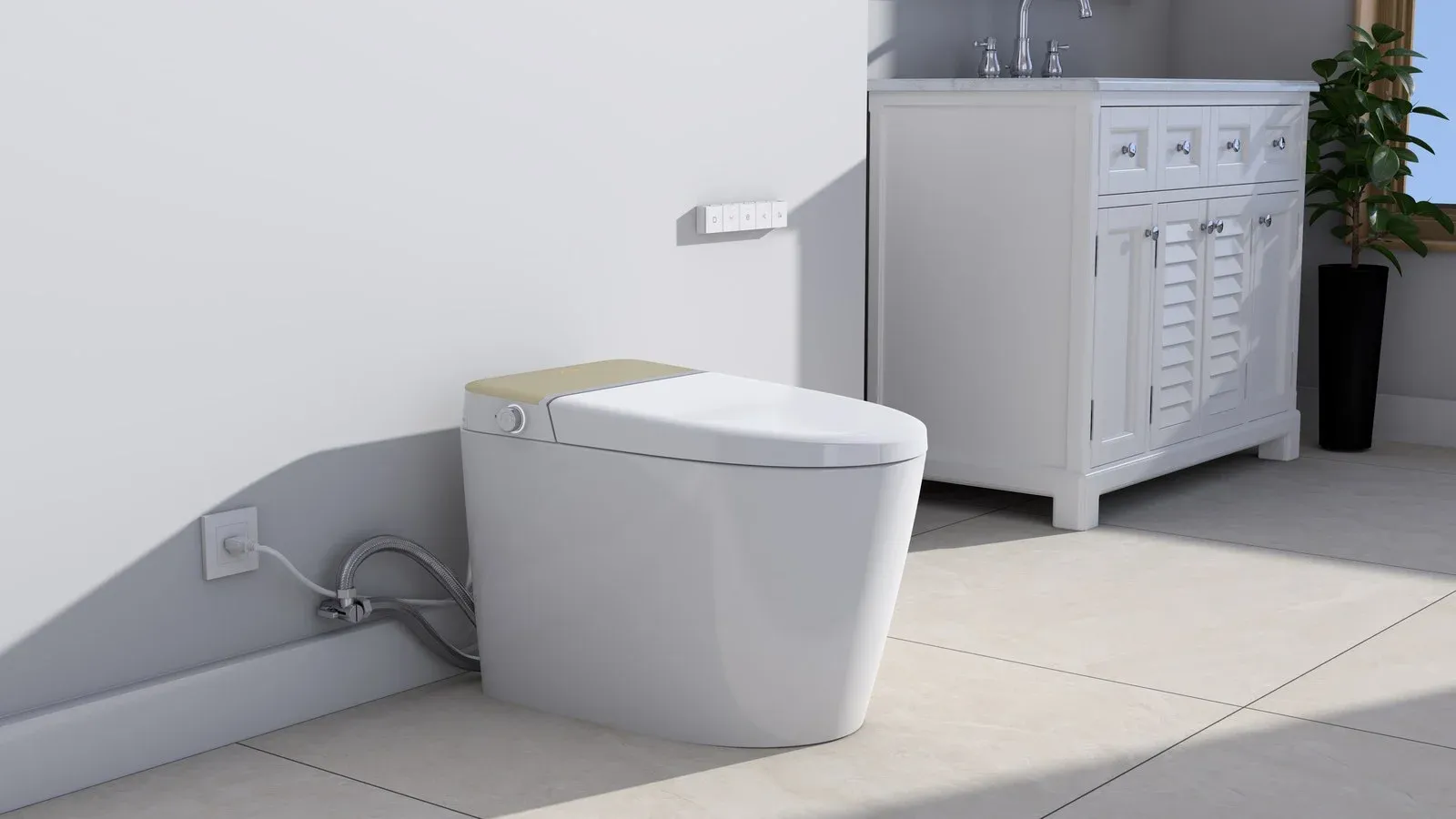
Documented specifications include:
- 110–130V electrical configuration
- 305 mm rough-in
- 0.15–0.75 MPa static supply-pressure range
- Siphon jet flushing
- Automatic lid operation
- Foot-sensor controls
- Heated seat and warm-air drying
- Remote control operation
Its documented pressure requirements make supply verification an important part of product selection.
The exact internal flushing architecture and final configuration should be confirmed through the approved model documentation.
W1 Integrated Smart Toilet
The Lavilys W1 offers different water-supply configurations.
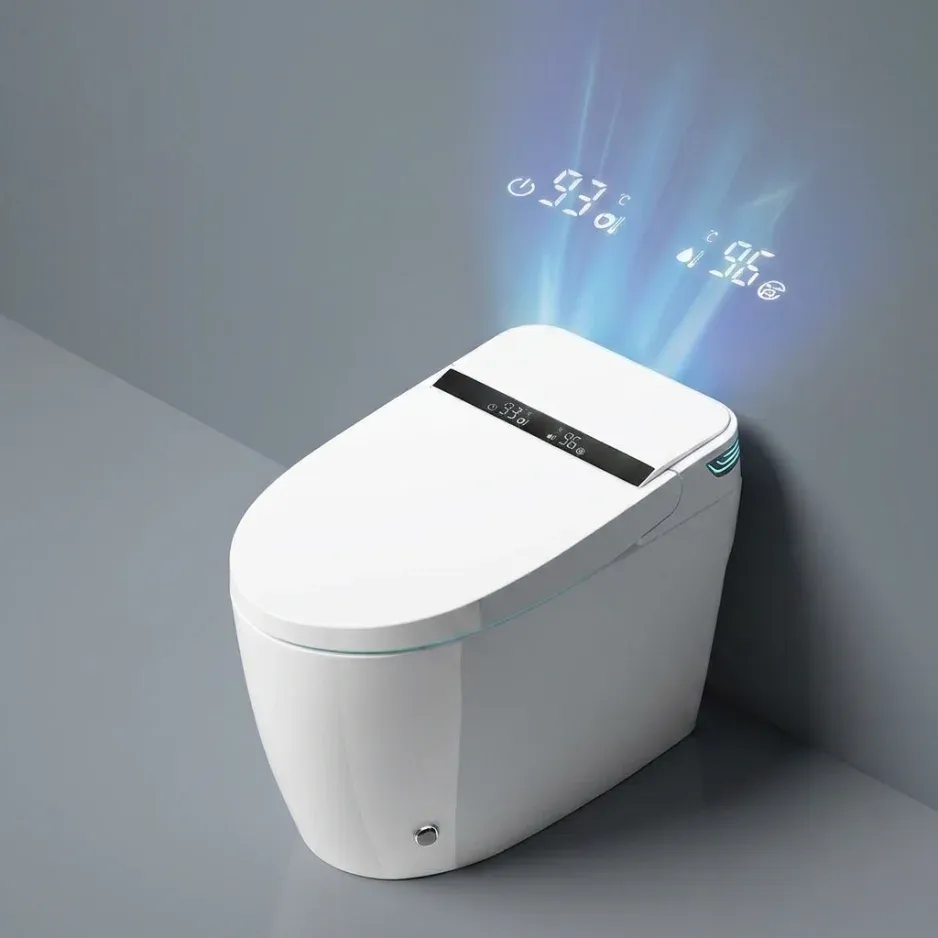
Published product information identifies two pressure ranges:
- With water tank: 0.06–0.75 MPa
- Without water tank: 0.15–0.75 MPa static
The W1 is also available in documented 300 mm and 400 mm rough-in options.
This makes it a useful example of why configuration matters more than exterior appearance when selecting a smart toilet.
6293 Integrated Smart Toilet
The Lavilys 6293 is another integrated smart toilet with documented tank-equipped and non-tank supply-pressure options.
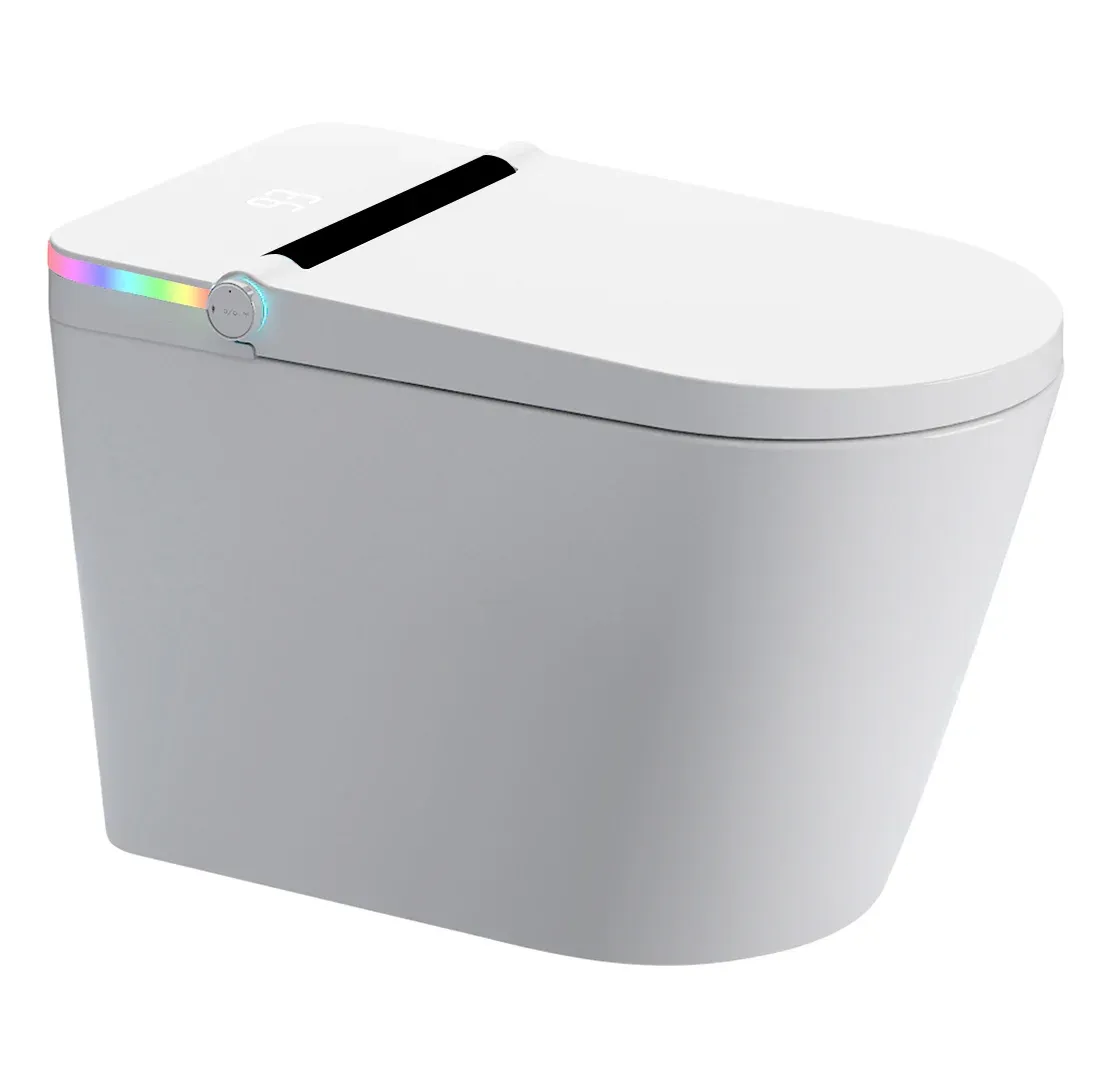
Its published technical information includes:
- 110V AC ±10% power configuration
- 300 mm rough-in
- 4.8 L flush volume
- Automatic lid operation
- Adjustable washing and drying functions
- Tank and non-tank water-pressure configurations
For projects with restricted supply pressure, buyers can request confirmation of the appropriate tank-equipped configuration.
Choosing Between Models
The A18, W1, and 6293 illustrate different combinations of installation requirements and electronic functions.
Their suitability should be evaluated using the actual model and option offered—not assumptions based on appearance alone.
Browse the Lavilys Smart Toilet Collection to compare available models.
Tankless Toilet Buying Checklist for Distributors and Project Buyers
For wholesale purchasing, evaluating a tankless toilet involves more than choosing a preferred appearance.
A suitable product should match the intended destination market, installation conditions, and service requirements. The bathroom retailer and distributor programme sets out how opening orders, samples and spare-part support are handled for a new range.
Verify the Product’s Actual Flushing Architecture
Confirm whether the toilet uses direct supply, a concealed reservoir, or another assisted-flushing design.
Request a technical explanation when the product description only says “tankless.”
Request Model-Specific Specifications
Obtain the selected model’s:
- Technical data sheet
- Installation manual
- Approved dimensional drawing
- Water-pressure requirements
- Flush-volume specification
- Electrical specifications, if applicable
- Product configuration and option list
Published manuals and dimension drawings can be checked in the technical document library before an RFQ.
Check Applicable Certifications
For North American purchasing, product requirements may include plumbing, electrical, water-efficiency, and electronic compliance considerations.
These are separate categories.
A cUPC plumbing listing does not automatically establish electrical approval, and a low flush-volume figure does not automatically establish WaterSense certification.
Certificate validity and scope should be checked against the exact product model.
Read the Lavilys Guide to cUPC, WaterSense, UL and FCC.
Evaluate Maintenance and Spare Parts
Ask about the availability of flushing components, sensors, control boards, replacement seats, and other relevant parts.
For commercial properties, standardized products and clearly documented maintenance procedures can simplify future servicing.
Consider a Pilot Installation
Before approving a large project order, test an approved sample configuration under representative conditions.
A pilot installation can help verify flushing performance, water pressure, control operation, user comfort, and service accessibility.
For a development with different plumbing zones, representative testing may be required in more than one location.
Frequently Asked Questions About Tankless Toilets
Short answers to the most common buyer questions are below. The procurement and technical FAQ covers model-level fitment, compliance and spare-parts questions.
1. What is a tankless toilet?
A tankless toilet is a toilet that does not use a conventional exposed flushing tank. True tankless systems operate without a conventional water-storage tank, while some tankless-looking toilets have concealed reservoirs. The actual internal design should be confirmed before purchase.
2. How does a tankless toilet flush?
A direct-supply tankless toilet uses water from the building’s plumbing system through a flushing mechanism. Other streamlined toilets may use a concealed water tank or an assisted-flushing arrangement. The process depends on the product’s design.
3. Do tankless toilets need high water pressure?
Some direct-supply models require a higher minimum pressure than certain tank-equipped models. For example, selected Lavilys configurations specify 0.15 MPa minimum static pressure without a tank, while specified tank configurations are available from 0.06 MPa. Requirements vary by model.
4. Can a tankless toilet work with low water pressure?
It depends on the flushing system. A direct-supply toilet may not operate correctly below its specified pressure and flow requirements. A compatible built-in tank model may be a better option, but installation conditions still need to be verified.
5. Are tankless toilets better than regular toilets?
Tankless toilets can offer a modern appearance and different installation or smart-function options. However, a conventional tank toilet may be more practical for certain plumbing conditions and budgets. Neither design is universally better.
6. Do tankless toilets save more water?
Not necessarily. Water efficiency depends on the tested flush volume and system performance. Buyers should compare gallons per flush and verify WaterSense labeling when required, rather than assuming a tankless design uses less water.
7. Do tankless toilets need electricity?
Not all tankless toilets require electricity. Mechanical flushometer systems can operate without electrical power. Electronic smart toilets generally require power for their comfort functions and some automated flushing features.
8. Are tankless toilets expensive to maintain?
Maintenance costs depend on the flushing system and the complexity of the product. A mechanical tankless toilet has different servicing requirements from an electronic smart toilet with sensors, heaters, and automatic controls.
9. Can I replace a regular toilet with a tankless toilet?
Often, but compatibility must be checked first. Important considerations include rough-in measurements, water pressure, plumbing connections, dimensions, electrical requirements, and applicable installation codes.
10. Are tankless toilets suitable for hotels and apartment buildings?
They can be suitable when the products meet the property’s technical requirements. For multi-unit projects, buyers should evaluate water pressure across the building, installation consistency, maintenance access, and spare-parts availability before approving a final model.
Conclusion: Is a Tankless Toilet Worth It?
Tankless toilets can be an attractive solution for modern residential and commercial bathrooms.
Their streamlined appearance, potential space-saving design, and compatibility with advanced smart features make them appealing for luxury homes, hotel renovations, and apartment developments.
However, the main purchasing decision should not be based on appearance alone.
The most important factors are flushing-system design, available water pressure, installation compatibility, documented performance, and long-term service requirements.
For buildings with sufficient water pressure, a suitable direct-supply system may work well.
For properties with lower or inconsistent pressure, a compatible built-in tank configuration may be a more practical choice.
Both arrangements can support modern smart toilet functions.
The right product is the one that delivers the required performance under the actual installation conditions.
Find the Right Smart Toilet for Your Project
Lavilys supplies integrated smart toilets and bathroom solutions for distributors, retailers, hotels, and residential developments.
Our product range includes configurations designed for different rough-in dimensions, water-pressure conditions, and electronic comfort requirements.
Whether you are selecting products for a showroom or preparing a multi-unit installation, our team can help compare available models and technical documents.
For a model-specific recommendation or wholesale quotation, send your project details to our team and share:
- Destination country or market
- Expected order quantity
- Required toilet rough-in
- Available water pressure
- Electrical supply
- Preferred smart toilet functions
- Required certifications or technical documents
Our team can review the information and recommend suitable configurations for further evaluation.
Lavilys — Smart Living Begins in the Bathroom.
Related pages
Referenced models
Products discussed in this article
A18 Integrated Smart Toilet
A17 sibling with microwave-sensing auto lid and foot-sensor operation — adds hands-free open/close for hospitality and premium residential use.
View specifications Smart ToiletW1 Integrated Smart Toilet
A compact 110V integrated model with direct side control, temperature feedback and a documented comfort function set.
View specifications Smart Toilet6293 Integrated Smart Toilet
A U-shaped 110V integrated smart toilet with automatic lid operation, instant heating and adjustable washing, drying and temperature controls.
View specificationsNext step
Send us the project details
Share the market, quantity, site conditions and documentation you need. Our technical team confirms configuration and compliance scope before anything is quoted.