
Buyer Guide / 22 min read
What Is a Smart Toilet? Features, Benefits & How It Works
What is a smart toilet? Learn how it works, its key features, installation needs, and how to choose the right model for homes, hotels, and projects.
Key takeaways
- A smart toilet combines a ceramic toilet body with electronic washing, heated seating, warm-air drying, sensing and flushing controls.
- Integrated models require a confirmed rough-in, water pressure, grounded power and model-specific documentation before ordering.
- Basic electronic fixtures cover washing and seat heating; automatic lids, deodorization and foot sensors are model-specific upgrades.
- Compare flush volume, voltage, rough-in and certification evidence for the exact model rather than for a brand's whole range.
B2B sourcing checklist
Move from research to a model-specific quotation
Use the resources below to confirm specifications, compliance scope, order terms and delivery timing before requesting a quote.
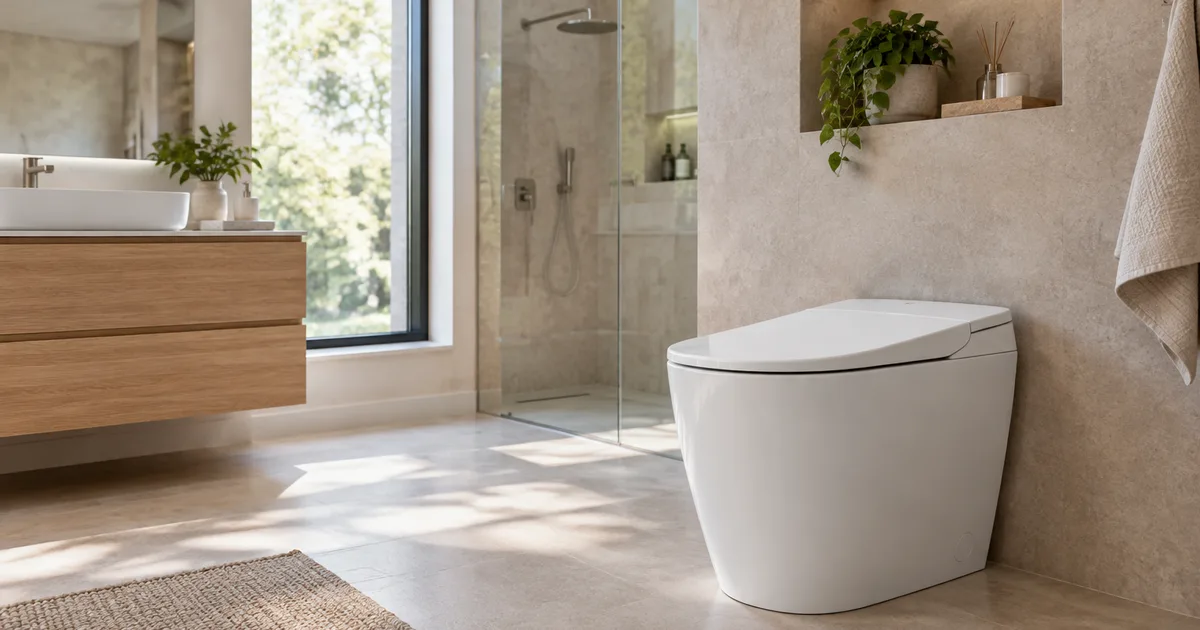
The short answer to “what is a smart toilet” is that it is more than a modern-looking bathroom fixture: it combines conventional toilet functionality with electronic controls, water-based personal cleansing, and automated comfort features to create a more convenient bathroom experience.
Unlike a traditional toilet, a smart toilet can offer heated seats, adjustable bidet washing, warm-air drying, automatic flushing, and touchless operation. Some advanced models also include self-cleaning nozzles, deodorization systems, night lights, and automatic lid opening.
As smart bathroom technology becomes a consideration for residential renovations, hospitality properties, and multi-family developments, understanding how these fixtures work is increasingly important.
This guide explains what a smart toilet is, how it works, the features worth considering, its advantages and limitations, and what buyers should verify before installation or procurement.
What Is a Smart Toilet?
A smart toilet is a toilet equipped with electronic components that automate or enhance functions such as personal washing, seat temperature control, drying, and flushing.
A traditional toilet primarily handles waste disposal through a mechanical flushing system. A smart toilet adds electronic controls, sensors, water-heating components, and other features that improve how users interact with the fixture.
For example, instead of relying entirely on toilet paper, a smart toilet with a bidet function allows users to wash with a controlled stream of water. After washing, a built-in warm-air dryer may provide additional comfort.
Depending on the model, the toilet can also detect when someone is seated, open or close its lid automatically, and flush after the user leaves.
The fixture may also be called an intelligent toilet, electronic toilet, high-tech toilet, or integrated bidet toilet. Although these terms are often used interchangeably, the actual functions vary significantly between products.
It is important to understand that not every smart toilet includes every advanced feature. Basic electronic models may provide washing and seat heating, while premium models may include automatic lids, multiple control options, deodorization, and additional cleaning functions.
How Does a Smart Toilet Work?
A smart toilet combines a conventional plumbing system with electronically controlled components.
The plumbing system supplies water and removes waste, while the electronic system controls functions such as washing, drying, heating, and automatic operation.
The following sequence illustrates how a typical fully featured smart toilet works.
1. Sensors Detect the User
Many models include seat sensors that detect whether someone is sitting on the toilet.
This helps control certain functions and may prevent the washing nozzle from operating when the seat is unoccupied.
Some premium models also add proximity or foot sensors.
Depending on the configuration, these sensors can open the lid when a user approaches or activate specific functions without requiring the user to touch the toilet.
2. The Washing System Provides Personal Cleansing
One of the most important smart toilet features is the integrated bidet washing system.
When a user activates the wash function, a retractable nozzle extends into position and delivers a controlled stream of water.
Depending on the model, users may be able to adjust:
- Water temperature
- Water pressure
- Nozzle position
- Washing mode
- Spray movement
Common modes include rear washing, front or feminine washing, and oscillating or massage washing.
Some models feature instant water heating, which heats incoming water during operation rather than relying on a large stored hot-water reservoir.
3. The Warm-Air Dryer Operates After Washing
After the washing cycle, a built-in warm-air dryer can direct air toward the user.
On models with adjustable drying, the air temperature can be selected according to personal preference.
This function can reduce reliance on toilet paper, although actual paper use depends on individual habits and the effectiveness of the drying process.
4. Electronic Controls Manage Comfort Settings
The fixture typically includes an electronic control system connected to components such as the water heater, heated seat, dryer, sensors, and washing nozzle.
Users may control these functions through a wireless remote, side-mounted knob, control panel, or other model-specific interface.
Advanced models may remember preferred settings, although memory functions are not standard across all smart toilets.
5. The Toilet Flushes Waste
The flushing system works alongside the electronic comfort features.
On models with automatic flushing, a sensor or control system can initiate a flush after use. Other models provide manual controls, remote flushing, or foot-activated flushing.
The flushing mechanism itself depends on the toilet’s design.
The flushing system may use a gravity-assisted, siphonic, pressure-assisted, or other manufacturer-specific flushing system.
Some models include a built-in water tank or an assisted-flushing mechanism designed for particular water-pressure conditions.
Automatic flushing should not be confused with water-saving performance. The actual water consumption depends on the model’s tested flush volume and flushing design.
What Does a Smart Toilet Do? 9 Important Features Explained
Models differ in design, price, and technology. Understanding the functions helps buyers distinguish essential capabilities from optional upgrades. For a ranked view of which functions deliver the most value by application, see which high-tech toilet features matter most.
1. Heated Toilet Seat
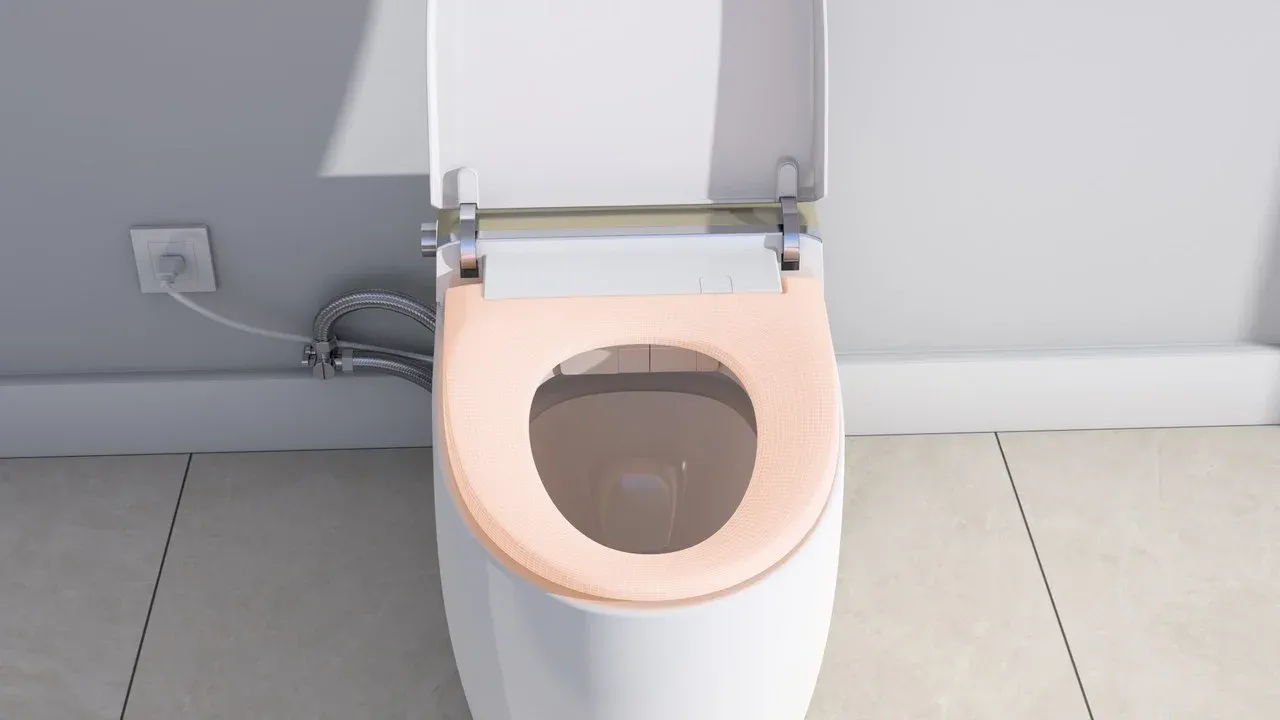
A heated seat is one of the most recognizable smart toilet features.
An integrated heating element warms the seat, and compatible models allow users to adjust the temperature.
This is particularly useful in colder environments and bathrooms where the seat may otherwise feel uncomfortable.
For hospitality properties, a heated seat can also contribute to a more premium guest experience.
2. Adjustable Bidet Washing
A built-in bidet system provides water-based cleansing through a retractable nozzle.
Common options include rear washing, front washing, oscillating washing, and adjustable water temperature or pressure.
Some models offer gentler washing settings for users who prefer a lower water pressure.
For product selection, adjustable controls are often more valuable than simply having a long list of preset modes.
3. Automatic Flushing
Automatic flushing uses sensors or programmed controls to activate the flushing mechanism.
It reduces the need to touch a flush button or handle.
This can be particularly attractive in guest bathrooms and properties where convenient, touchless operation is a design priority.
However, automatic flushing does not necessarily use less water than manual flushing. Buyers should compare the rated gallons per flush separately. For the sensor and valve sequence behind the feature, read how automatic flush toilets work.
4. Automatic Lid Opening and Closing
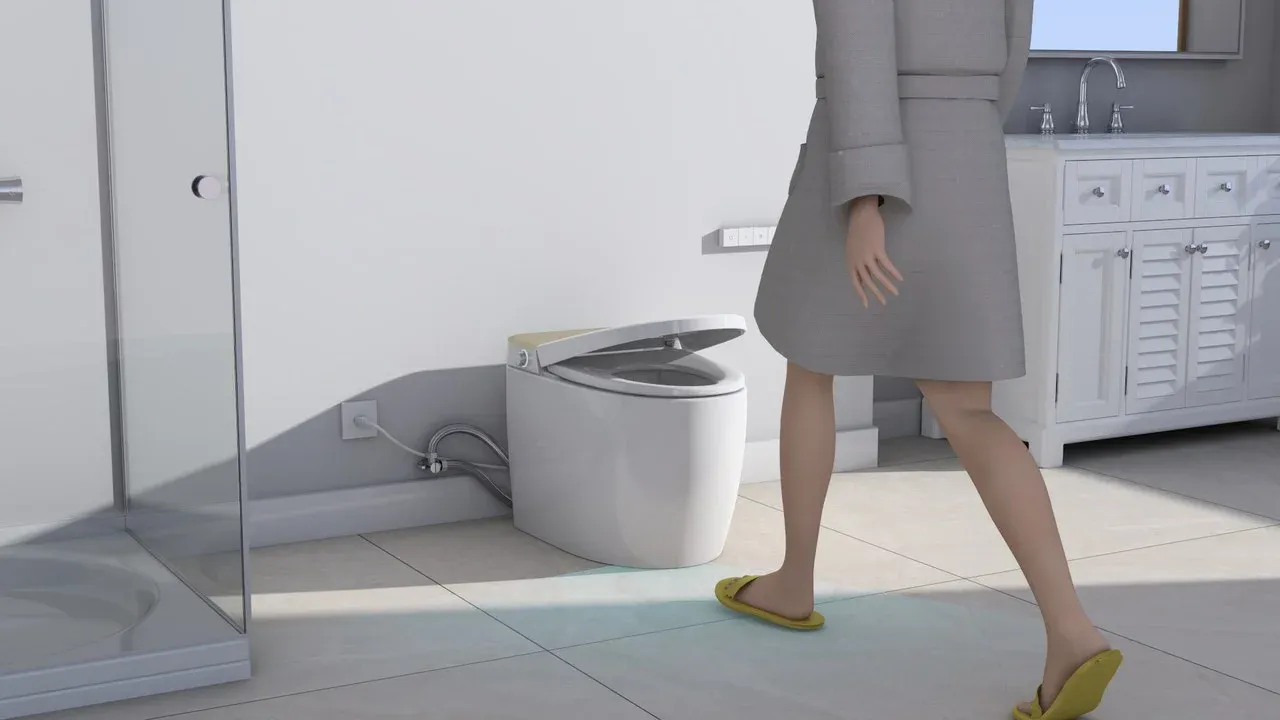
Certain intelligent toilets include proximity sensors that detect a user approaching or leaving.
Depending on the model, the lid may open automatically and close after a specified delay.
Automatic lid functions are commonly positioned as premium features because they create a more hands-free experience.
For example, the Lavilys A18 Integrated Smart Toilet includes microwave-sensing automatic lid operation and foot-sensor controls.
5. Warm-Air Drying
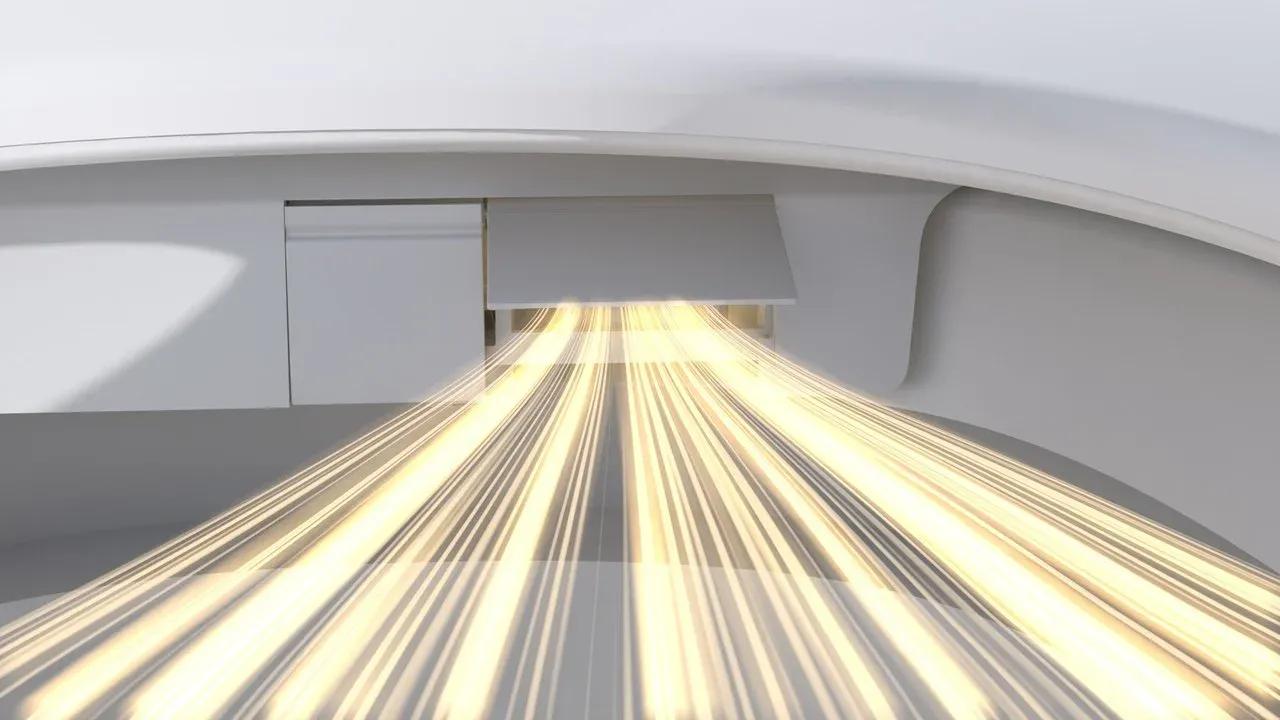
Warm-air drying complements the bidet washing function.
Instead of relying exclusively on toilet paper, users can activate a drying cycle after cleansing.
Some systems provide several selectable air-temperature settings.
For commercial buyers, the drying function should be evaluated for user comfort, operating time, and ease of control.
6. Self-Cleaning Nozzle
Many electronic bidet systems include an automatic nozzle-rinsing function.
The nozzle may be rinsed before or after use, depending on the product design.
Some models also include additional cleaning technologies, such as UV-based components or antimicrobial materials.
These features should be evaluated according to their documented operation and test evidence. A self-rinsing nozzle does not eliminate the need for regular cleaning and maintenance.
7. Deodorization System
Selected smart toilets include a built-in deodorization system intended to reduce bathroom odors.
Depending on the product, this may involve a fan, filter, or another air-treatment mechanism.
For hotels and residential properties, deodorization can be an additional comfort feature, but its effectiveness depends on the individual system and its maintenance requirements.
8. LED Night Light
A built-in night light provides gentle illumination around the toilet or bowl.
This feature can make nighttime bathroom visits more convenient without turning on bright overhead lighting.
Some premium designs also include decorative lighting, but decorative effects should be distinguished from functional illumination.
9. Foot-Sensor and Remote-Control Operation
These fixtures may provide multiple ways to activate functions.
A remote control can offer convenient access to washing and temperature adjustments, while a side knob provides an alternative physical control.
On compatible models, a foot sensor may activate lid opening, seat movement, or flushing.
Having more than one control method can be useful in environments with different types of users, such as hotels and shared residential properties.
What Are the Different Types of Smart Toilets?
Smart bathroom products generally fall into two main categories: integrated smart toilets and electronic bidet toilet seats.
The right choice depends on whether the project requires a complete toilet replacement or an upgrade to an existing fixture.
Integrated Smart Toilets
An integrated smart toilet combines the ceramic toilet body and electronic features into a complete product.
These models are often selected for newly built homes, major bathroom renovations, luxury residential developments, and hotels.
Common characteristics include:
- Integrated ceramic and electronic design
- Built-in bidet washing functions
- Heated seat and warm-air drying options
- Automatic flushing on selected models
- Automatic lid or foot-sensor controls on selected models
- A coordinated, modern appearance
Integrated models require the installation site to match the product’s plumbing and electrical specifications.
Explore the Lavilys Integrated Smart Toilet Collection to compare available models and their documented specifications.
Electronic Bidet Toilet Seats
An electronic bidet seat upgrades an existing compatible toilet without replacing the entire ceramic fixture.
Depending on the model, it may provide heated seating, water washing, warm-air drying, and adjustable controls.
This option is often suitable for renovations where the existing toilet remains in good condition.
However, not every electronic bidet seat fits every toilet bowl.
Buyers must verify bowl shape, mounting-hole spacing, rear clearance, water connections, and access to an appropriate electrical outlet.
Lavilys also supplies Smart Toilet Seats for compatible renovation and retrofit applications.
For a more detailed comparison, read Bidet Seat vs Integrated Smart Toilet: Which One Should You Stock?.
Tankless and Built-In Tank Smart Toilets
Another important distinction concerns flushing-system design.
Some smart toilets have no visible external tank, creating a streamlined appearance. However, this does not necessarily mean the toilet operates without any water-storage component.
Certain models rely more directly on incoming water pressure, while others use an internal reservoir or assisted-flushing system.
This difference matters because buildings with low water pressure may require a model designed for those conditions.
Buyers should check the exact water-pressure requirements rather than assuming all tankless-looking toilets work in the same way.
Smart Toilet vs Traditional Toilet: What’s the Difference?
Both fixture types perform the same basic waste-disposal function, but their user experience and technical requirements can be very different.
| Feature | Traditional Toilet | Smart Toilet |
|---|---|---|
| Waste flushing | Manual; automatic on some systems | Manual and/or automatic |
| Water-based personal washing | Usually requires an additional accessory | Often integrated |
| Heated seat | Usually not included | Available on many models |
| Warm-air drying | Not included | Available on compatible models |
| Automatic lid | Uncommon | Available on premium models |
| Adjustable washing | Not included | Common on bidet-equipped models |
| Electricity | Usually not required | Generally required for electronic functions |
| Installation | Standard plumbing requirements | Plumbing plus electrical and model-specific checks |
| Maintenance | Mainly mechanical components | Mechanical and electronic components |
| Purchase cost | Generally lower | Generally higher |
The most important difference is not appearance alone.
A traditional toilet primarily provides a flushing function. A smart toilet can integrate several additional functions into one fixture.
However, the added technology introduces additional requirements for electricity, maintenance, compatible installation conditions, and replacement components.
What Are the Benefits of a Smart Toilet?
Greater Personal Comfort
Heated seating, temperature-controlled washing, and warm-air drying can make everyday bathroom use more comfortable.
Adjustable settings are particularly valuable because different users may prefer different water pressures or temperatures.
More Convenient Personal Cleansing
Water-based washing provides an alternative to relying exclusively on dry toilet paper.
A properly configured bidet system allows users to control the cleansing process according to their preferences.
However, smart toilets are not medical devices, and ordinary comfort features should not be interpreted as treatment for health conditions.
Reduced Physical Contact
Automatic flushing, sensor-controlled lids, and foot-operated controls can reduce how often users need to touch common toilet controls.
This may be attractive in guest bathrooms, hospitality environments, and premium residential spaces.
Touchless operation does not make a toilet germ-free, and regular bathroom cleaning remains necessary.
Potential for Better Water Efficiency
Some smart toilet models use high-efficiency flushing systems.
According to the U.S. Environmental Protection Agency, WaterSense-labeled toilets use 1.28 gallons per flush or less and meet independently verified performance and efficiency criteria.
That represents approximately 20% less water than the federal standard of 1.6 gallons per flush.
However, not every model is WaterSense-labeled, and electronic functions alone do not guarantee water savings.
Buyers should verify both flush-volume specifications and any claimed efficiency certification for the exact model.
A More Modern Bathroom Experience
Integrated smart toilets often have sleek ceramic shapes and concealed electronic components.
For homeowners, this can contribute to a modern bathroom aesthetic.
For hotels, property developers, and premium residential projects, smart toilets can also become part of a broader technology and interior-design specification.
The actual value depends on the target users, project budget, and the reliability of the selected product.
Are There Any Disadvantages to Smart Toilets?
These fixtures offer additional comfort and automation, but they are not necessarily the best option for every bathroom.
Higher Initial Cost
Integrated smart toilets generally cost more than conventional toilets because they include electronic components, sensors, heaters, and advanced controls.
The total project cost may also include electrical work, plumbing modifications, installation labor, and future replacement parts.
For bulk procurement, buyers should evaluate total installed cost rather than comparing product prices alone.
Dependence on Electricity
Most electronic smart toilet functions require electrical power.
During a power outage, washing, heated seating, automatic lid operation, and other features may become unavailable.
Some models support manual, mechanical, or battery-assisted emergency flushing, but this capability must be confirmed for the specific product.
Additional Maintenance Requirements
These fixtures contain electronic and mechanical components that may require periodic maintenance.
Typical maintenance considerations include nozzle cleaning, water-filter replacement where applicable, sensor checks, and access to replacement parts.
Using compatible cleaning products and following the manufacturer’s instructions are important for protecting the electronic system. If a function stops working, the smart toilet troubleshooting guide explains which checks are safe for users and which require a technician.
Installation Compatibility
Not every model fits every bathroom.
Water pressure, electrical supply, drain position, toilet dimensions, and available clearance can all affect compatibility.
These issues become especially important when multiple units must be installed consistently across a residential or commercial development.
Do Smart Toilets Need Electricity and Special Plumbing?
Most electric models require an appropriate electrical supply and compatible plumbing connections.
Before installing or ordering a smart toilet, buyers should confirm several technical requirements.
Electrical Supply and Voltage
Voltage requirements vary by destination market and model.
For the United States, many products are configured for approximately 110–120V electrical systems. The final acceptable range must match the manufacturer’s rating.
For example, the Lavilys A18 has a documented North American configuration in the 110–130V range.
A bathroom installation also needs appropriate grounding and electrical protection, including GFCI protection where required by applicable electrical codes.
Electrical work should be evaluated by a qualified installer.
A unit designed for 220V should not be assumed compatible with a North American outlet.
For more details, read the Smart Toilet Voltage Requirements for North America.
Water Pressure
Different flushing systems require different levels of incoming water pressure.
Some direct-supply configurations require higher minimum pressure than models equipped with internal water storage or an assisted-flushing system.
For example, the Lavilys range includes configurations with minimum specified pressures of approximately 0.15 MPa for certain direct-supply models and 0.06 MPa for certain built-in tank configurations.
These figures are model-specific, not universal requirements.
For multi-story buildings, buyers should measure available water pressure under realistic operating conditions before finalizing the product specification.
Toilet Rough-In Measurement
The rough-in is the distance from the finished wall to the center of the toilet’s floor drain.
In many North American installations, a nominal 12-inch rough-in is common, but other dimensions exist.
Some smart toilet models are designed for a specific rough-in, while others are available in multiple configurations.
For example:
| Lavilys Model | Documented Rough-In |
|---|---|
| A17 | 305 mm |
| A18 | 305 mm |
| W1 | 300 mm / 400 mm options |
These specifications must be matched to the actual installation site.
A rough-in mismatch can prevent proper installation, even when the toilet’s appearance and electrical specifications are otherwise suitable.
Read the 300 mm vs 400 mm Smart Toilet Rough-In Guide for additional measurement guidance.
Bathroom Dimensions and Clearance
Before installation, check the complete toilet dimensions, including depth, width, height, and required clearances.
Allow adequate space for the lid to open, for a person to use the fixture comfortably, and for service access.
In commercial environments, applicable accessibility, building, and plumbing requirements must also be considered. The ADA 2010 Standards set the clear floor space and water-closet dimensions that apply to accessible toilet rooms in the United States, and those dimensions constrain the fixture choice rather than the other way around.
For a comprehensive technical review, consult the Smart Toilet Installation Requirements Checklist.
How to Choose the Right Smart Toilet
Choosing a smart toilet should begin with installation conditions and user requirements rather than appearance or the total number of advertised functions.
For Residential Bathrooms
Residential buyers may prioritize personal comfort, appearance, and ease of daily use.
A practical selection process begins by confirming the bathroom’s rough-in measurement, electrical outlet, available water pressure, and toilet dimensions.
After compatibility is established, compare features such as heated seats, washing modes, dryers, automatic lids, and control interfaces.
For an existing bathroom where replacing the ceramic toilet is unnecessary, an electronic bidet seat may be an alternative.
For Hotels and Hospitality Projects
Hotels should consider both the guest experience and ongoing maintenance.
Hospitality buyers can review hotel smart bathroom supply and maintenance support alongside the model specifications.
Useful features may include intuitive controls, comfortable washing settings, automatic flushing, and easy-to-clean surfaces.
However, reliable operation and consistent product specifications are often more important than adding every optional feature.
When a hotel installs smart toilets across multiple rooms, standardizing model configurations can simplify staff training, maintenance procedures, and replacement-parts management.
For Apartment and Multi-Family Developments
Developers managing large numbers of residential units need consistent installation conditions.
Smart toilet selection should account for plumbing layouts, electrical readiness, water-pressure differences between floors, product availability, and maintenance support.
Standardized specifications can help reduce variation between units.
Where a property contains different bathroom layouts, more than one approved model may be necessary.
For phased multi-unit rollouts, construction project support covers specification alignment, logistics and installation planning.
For Distributors and Retailers
Wholesale buyers have additional concerns beyond end-user features.
The bathroom retailer wholesale program sets out opening order options, showroom units and replacement-parts support.
A suitable product range should include documented specifications, appropriate certification evidence, reliable technical support, clear warranty procedures, and a manageable after-sales process.
Product evaluation should also consider market-specific voltage, available rough-in sizes, replacement-part accessibility, and the ability to test sample units before expanding inventory.
For a more detailed sourcing process, read the Smart Toilet Buying Guide for Distributors.
Smart Toilet Models: Real Product Examples from Lavilys
Lavilys supplies integrated smart toilets for North American distributors, retailers, hospitality buyers, and residential projects.
Different models are designed around different feature sets and installation requirements.
The examples below show why buyers should compare specific product specifications rather than assuming all smart toilets are the same.
Lavilys A17: Integrated Smart Toilet for Everyday Comfort
The A17 is an integrated smart toilet with a documented North American voltage configuration and a 305 mm rough-in.
Its product range includes electronic comfort functions and foot-sensor operation.
It may be suitable for buyers seeking an integrated bathroom fixture without making automatic lid operation their primary selection criterion.
The final configuration and applicable technical documents should be confirmed before ordering. View the A17 Integrated Smart Toilet.
Lavilys A18: Touchless Smart Toilet with Automatic Lid
The A18 builds on the integrated design approach with additional automated functions.
Documented features include:
- Microwave-sensing automatic lid operation
- Foot-sensor controls
- Heated seat
- Adjustable warm-air drying
- Water-based personal cleansing
- Night light and deodorization functions
The A18 has a documented 305 mm rough-in and North American voltage configuration.
Its automatic operation may be attractive for premium residential and hospitality applications.
View the A18 Integrated Smart Toilet.
Lavilys W1: Alternative Rough-In Configurations
The W1 provides another integrated smart toilet configuration.
It is documented with a 110V electrical configuration and offers 300 mm and 400 mm rough-in options.
Its comfort features include bidet washing, seat heating, warm-air drying, and electronic control functions.
This flexibility can be useful when project layouts require different drain positions.
View the W1 Integrated Smart Toilet.
Compare Specifications Before Selecting
| Model | Voltage | Rough-In | Main Selection Consideration |
|---|---|---|---|
| A17 | 110–130V | 305 mm | Integrated design and core comfort functions |
| A18 | 110–130V | 305 mm | Automatic lid and touchless controls |
| W1 | 110V AC ±10% | 300 / 400 mm | Alternative rough-in configurations |
Specifications reflect the documented configurations referenced here. Available functions, electrical requirements, compliance scope, and product availability should be reconfirmed before procurement.
Browse the full integrated smart toilet range for further comparisons.
What Should B2B Buyers Check Before Ordering Smart Toilets?
For distributors, developers, and hospitality buyers, a smart toilet purchasing decision involves more than product features.
The following factors can affect project compatibility, long-term service, and procurement risk.
1. Product and Installation Specifications
Request the manufacturer’s technical documentation and verify the exact model number. Published manuals and dimension drawings can be checked in the technical document library before an RFQ.
The documentation should establish the relevant voltage, frequency, power requirements, rough-in, water pressure, dimensions, flushing system, and available functions.
Avoid relying exclusively on marketing images or generic feature descriptions.
2. Model-Specific Certification Evidence
North American buyers may need to review applicable plumbing, electrical, water-efficiency, or electromagnetic compatibility requirements.
Depending on the project and product, these may involve cUPC, UL-related documentation, FCC requirements, or WaterSense labeling.
These are separate regulatory or certification categories.
A certificate associated with one model does not automatically cover every product supplied by the same manufacturer.
Buyers should request the exact listing or supporting documents relevant to their selected configuration.
3. Product Quality and Maintenance
Evaluate the ceramic body, flushing performance, electronic controls, washing system, and maintenance accessibility.
For commercial installations, consider how quickly a service technician can identify a problem and obtain a compatible replacement component.
A sophisticated feature is only useful when the product can be operated and maintained reliably.
4. Warranty and After-Sales Support
Confirm the warranty period, exclusions, spare-parts availability, fault-reporting process, and responsibility for technical support.
For large projects, establish the maintenance procedure before installation begins.
5. Samples and Pilot Installations
A pilot installation can help buyers evaluate the actual product before committing to a large rollout.
It allows installers to confirm site compatibility and gives operators an opportunity to test controls, washing functions, flushing behavior, and maintenance access.
For hotels and residential developments, successful pilot testing can also inform the final standardized specification.
Frequently Asked Questions About Smart Toilets
Short answers to the most common buyer questions are below. The procurement and technical FAQ covers model-level fitment, compliance and spare-parts questions.
What does a smart toilet actually do?
A smart toilet combines conventional waste flushing with electronically controlled features. Depending on the model, it can provide water-based personal washing, heated seating, warm-air drying, automatic flushing, touchless lid operation, and adjustable user controls.
Does a smart toilet need electricity?
Most electronic smart toilets require electricity for functions such as water heating, seat heating, drying, sensors, and automatic controls. The required voltage and circuit specifications depend on the model and destination market.
Can a smart toilet work during a power outage?
Some models include an emergency or manual flushing function, while others may require electricity for flushing. Even when emergency flushing is available, electronic comfort functions generally do not operate normally without power. Always confirm the specific product’s backup capabilities.
Do smart toilets use more water than regular toilets?
Not necessarily. Water consumption depends on the toilet’s flushing system and rated flush volume, not simply whether it includes electronic features. Some smart toilets use high-efficiency flushing systems, while bidet washing consumes additional water during cleansing. Compare the manufacturer’s documented figures.
Are smart toilets hygienic?
Water-based washing, self-rinsing nozzles, and touchless controls can support convenient personal cleansing and reduce contact with certain surfaces. However, these features do not replace routine cleaning, and hygiene claims should be evaluated based on the specific product design and test evidence.
Are smart toilets difficult to maintain?
Maintenance requirements vary. Users should follow the product manual for cleaning, filter care, nozzle maintenance, and troubleshooting. Electronic components can make repairs more specialized than those of a conventional toilet, so replacement-part availability and technical support are important.
Is a smart toilet the same as a bidet?
Not exactly. A bidet is a fixture or device used for water-based personal washing. Many smart toilets include an integrated bidet function, but they may also provide seat heating, drying, sensors, and automatic flushing. An electronic bidet seat can add some of these functions to an existing toilet.
Can you install a smart toilet in an existing bathroom?
Often, yes, provided the installation site is compatible. The buyer should verify rough-in, water connections, water pressure, electrical supply, dimensions, and clearances. Professional installation may be required, especially when plumbing or electrical changes are necessary.
Are smart toilets worth buying?
A smart toilet may be worthwhile for buyers who value adjustable washing, comfort, touchless operation, and modern bathroom design. However, the added purchase cost, electrical requirements, installation conditions, and maintenance needs should be considered. The best choice depends on the intended users and the project.
What is the best smart toilet for a hotel or apartment project?
There is no universal best model. Hotels may prioritize intuitive controls, comfort, and consistent maintenance, while apartment developers may prioritize installation compatibility and standardized specifications. The appropriate model should be selected using documented technical requirements and a pilot evaluation.
Conclusion: Is a Smart Toilet Right for Your Bathroom or Project?
A smart toilet combines familiar toilet functionality with electronic technology designed to improve comfort, convenience, and control.
From heated seats and adjustable bidet washing to automatic flushing and touchless lid operation, different features can support different residential and commercial needs.
However, the most advanced toilet is not automatically the best choice.
Reliable flushing performance, electrical compatibility, water-pressure requirements, installation dimensions, maintenance accessibility, and model-specific documentation are essential considerations.
For homeowners, a smart toilet can become part of a more comfortable bathroom environment. For distributors, hotel operators, and property developers, it is also a technical product that requires careful specification and reliable supply support.
The right smart toilet is one that combines useful functions with documented compatibility and dependable long-term operation.
Explore Smart Toilet Solutions from Lavilys
Lavilys provides integrated smart toilets and electronic bidet seats for distributors, retailers, residential developments, and hospitality projects.
Our product range includes configurations designed for different bathroom layouts, electronic comfort requirements, and procurement needs.
Whether you are comparing models for a showroom, upgrading guest bathrooms, or preparing a multi-unit residential project, our team can help review available configurations and technical documentation.
Explore our Smart Toilet Collection or request a model-specific quotation.
To receive a relevant recommendation, share your destination market, required quantity, installation rough-in, electrical requirements, and preferred functions.
Lavilys — Smart Living Begins in the Bathroom.
Related pages
Referenced models
Products discussed in this article
A17 Integrated Smart Toilet
U-shaped integrated smart toilet with siphon jet flushing, foot-sensor operation and a full comfort function set — CUPC, UL and FCC certified for the North American market.
View specifications Smart ToiletA18 Integrated Smart Toilet
A17 sibling with microwave-sensing auto lid and foot-sensor operation — adds hands-free open/close for hospitality and premium residential use.
View specifications Smart ToiletW1 Integrated Smart Toilet
A compact 110V integrated model with direct side control, temperature feedback and a documented comfort function set.
View specificationsNext step
Send us the project details
Share the market, quantity, site conditions and documentation you need. Our technical team confirms configuration and compliance scope before anything is quoted.